Releasing turtle doves is the beginning of a recovery test
The important count is not only how many birds leave an enclosure, but how many thrive and return.
Verified brief
The story in 60 seconds
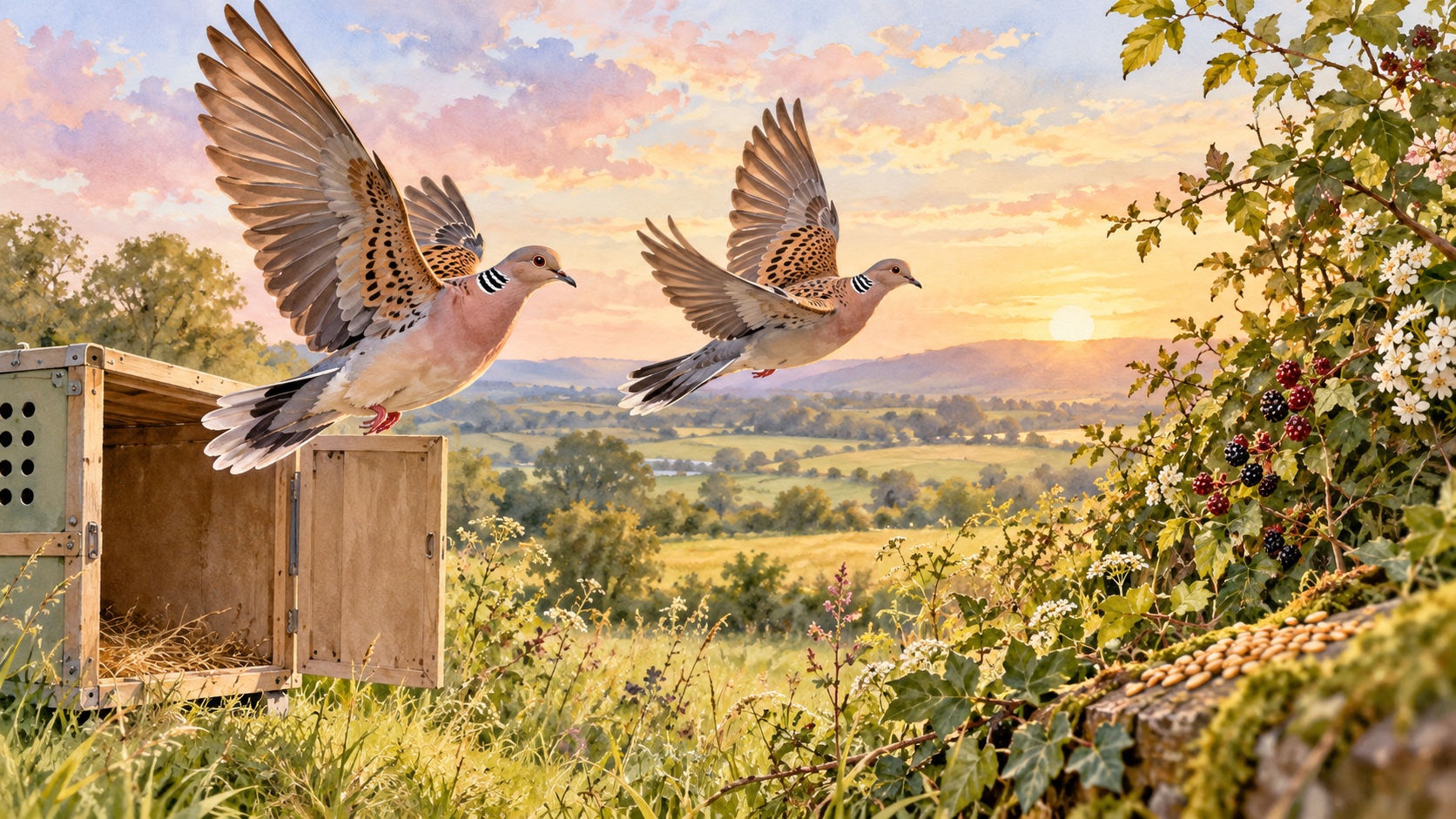
Thirty turtle doves were released in the South Downs in spring, with more planned for next year, the BBC reports. Habitat work is accompanying the release. The effort will be judged over breeding and migration cycles, not by the release-day total alone.
This brief and the full story below are based on the disclosed sources. SearchTrends Daily’s interpretation appears later under “Our take.”
Full reporting
The complete story
The South Downs National Park Authority released 30 turtle doves near Selborne in Hampshire as part of a recovery effort, according to the BBC. The report describes a species whose UK population has declined dramatically and says another 100 birds are being prepared for a later release.
The project also includes planting suitable food sources and restoring ponds near nesting areas. Rangers report encouraging early observations, including a female returning to an enclosure to lay eggs. The birds are expected to migrate to sub-Saharan Africa before a hoped-for return in spring 2027. Those early signs are promising, but do not establish a self-sustaining population.
Source perspectives
What other reporting adds
These are the reports, official records, and trend observations used to build the story. The note under each link explains exactly what it contributes.
SearchTrends Daily opinion
Our take
Analysis
What the evidence and search signal suggest
The habitat measures make the project more meaningful than a symbolic release. They address some of the conditions the birds need after leaving human care. However, a successful first season is only one stage. Monitoring return rates and breeding over time will reveal whether the site can support a durable population rather than repeatedly needing replacement birds.
Analysis and commentary are SearchTrends Daily’s interpretation. They are intentionally separated from the sourced account above.
Meaning
Why this matters
A familiar bird can disappear from ordinary experience long before people realise how severe its decline has become. A local recovery project gives that loss a concrete setting and a way to follow whether intervention is working.
Background
How we got here
Reintroduction depends on more than releasing individuals. Food, water, nesting conditions and survival across the full annual cycle all affect whether a population persists. Migratory species also face conditions far beyond the release site.
Outlook
What is likely to happen next
Watch the authority's monitoring updates, migration returns and subsequent breeding results. A larger planned release is not itself proof of recovery. Consistent survival and habitat suitability would be stronger reasons for optimism.
A conditional editorial assessment based on the evidence available at the review date, not a guaranteed outcome.
Live record
Updates to this story
No material updates yet.

Commentary
What we think
Our view: report the hopeful moment and keep following the less photogenic work. Conservation deserves attention after the launch, when survival and reproduction provide the real evidence. Readers should avoid disturbing nesting sites in an effort to see the birds.