Severe drought in southern England: what changes, and what doesn’t
The 15 October declaration steps up the response around vulnerable reservoir supplies. It does not automatically impose new household restrictions, cover entire counties or announce that taps will be turned off.

Verified brief
The story in 60 seconds
Severe drought has been declared in specified parts of southern England, with concern centred on supplies served by Ardingly and Wimbleball reservoirs. The Environment Agency says the status does not automatically trigger restrictions and is not a civil emergency. Government has announced closer monitoring and supply-protection measures. Existing water-company rules still matter: South East Water’s tighter Sussex hosepipe restrictions began on 9 October, not today.
This brief and the full story below are based on the disclosed sources. SearchTrends Daily’s interpretation appears later under “Our take.”
Full reporting
The complete story
The immediate answer is no: the 15 October severe-drought declaration does not, by itself, create a new nationwide hosepipe ban or announce that household supplies will stop. It marks an escalation in how authorities and water companies respond to pressure on particular water resources.
Defra’s announcement names parts of Cornwall, Devon, Dorset, Somerset, East Sussex and West Sussex. The Environment Agency’s accompanying explanation is more specific: the declaration covers homes and businesses served by Ardingly reservoir in West Sussex and Wimbleball in Somerset. A county name alone is therefore not enough to establish whether a particular address is affected.
The government says customer supplies will be uninterrupted and describes the action as preventive. That is its stated position at this announcement, not a guarantee about every future scenario. Ministers have instructed companies to monitor reservoir and river levels daily and strengthen water-quality monitoring. The Environment Agency will increase checks on businesses taking water from natural sources, while Local Resilience Forums prepare support if needed.
BBC reporting, updated on 15 October, independently describes the declaration and identifies the two reservoir systems as the focus of concern. It also reports measures by water companies to conserve supplies. This account does not treat a falling reservoir level as evidence that a household has already lost service.
Source perspectives
What other reporting adds
These are the reports, official records, and trend observations used to build the story. The note under each link explains exactly what it contributes.
Primary explanation dated 15 October 2026: supply-area scope around Ardingly and Wimbleball; severe status does not automatically trigger restrictions or constitute a civil emergency. Future supply measures are conditional, not scheduled here.
Read original source ↗DefraGovernment activates plan to protect consumers as severe drought declared in parts of EnglandPrimary 15 October announcement names parts of six counties and sets out daily monitoring, abstraction compliance checks and resilience preparation. The uninterrupted-supply statement is attributed to government at announcement, not an unconditional forecast.
Read original source ↗South East WaterHosepipe restrictions in all areas — Sussex updateLive supplier notice checked 15 October. Distinguishes Sussex restrictions tightened on 9 October from the 15 October severe-drought declaration and links to detailed local guidance. Does not establish rules for every supplier or county.
Read original source ↗BBC, via AOLSevere drought declared in parts of southern EnglandIndependent BBC reporting by Cameron Weldon, Jonathan Morris and Kirk England, displayed updated 15 October at 15:55 UTC. Describes the declaration, reservoir focus and company response. Its latest storage percentages are not reproduced without direct supplier verification.
Read original source ↗Environment AgencyDrought permit granted to support Wimbleball ReservoirHistorical primary release published 8 October; permit granted 2 October. Explains conditional changes to releases and environmental safeguards, and says the permit alone would not secure supply. Not presented as a new 15 October decision.
Read original source ↗Water UKFind your local water supplierPractical postcode finder for water and wastewater providers, checked 15 October. Page says the tool is operated by Landlord TAP, may omit some postcodes and directs provision questions to the water company. No personal postcode entered or result inferred.
Read original source ↗SearchTrends Daily opinion
Our take
Analysis
What the evidence and search signal suggest
Our analysis is that the most useful way to understand this story is as a sequence of decisions rather than a single dramatic label. Resource monitoring identifies pressure; operational changes and permits aim to protect supply; separate customer notices set out restrictions. Those stages can overlap without being interchangeable.
The government’s assurance about uninterrupted supply and the agency’s discussion of possible future measures answer different time horizons. Reporting either in isolation can mislead: an assurance is not proof that the underlying shortage has disappeared, while a contingency is not evidence that disruption has already been scheduled.
Geography also deserves more care than a six-county headline can provide. Reservoir supply networks, administrative boundaries and individual suppliers do not form one simple map. A useful account should identify the vulnerable systems and direct readers to current supplier information, without pretending to classify every address.
Search interest shows that people are asking about drought. It cannot tell us that everyone is facing the same restriction, that a particular policy caused the search increase or that demand will translate into a predictable number of readers.
Analysis and commentary are SearchTrends Daily’s interpretation. They are intentionally separated from the sourced account above.
Meaning
Why this matters
Three different questions are easy to collapse into one: how serious the resource shortage is, what a water company is doing about it, and what a customer may currently do. They need different answers.
A severe-drought classification signals a substantial problem and coordinated intervention. It is not itself a postcode-level instruction sheet. For readers, the useful next check is the drinking-water supplier’s current notice, including its affected supply area and dates. Existing restrictions are not cancelled just because the declaration creates no automatic new ones. Conversely, living somewhere in a named county does not establish that every announced measure applies to you.
If you do not know your supplier, the Water UK postcode finder linked in our sources identifies water and wastewater providers. Its operator notes that some postcodes may be missing and directs provision questions to the water company. Do not treat a wastewater provider’s name alone as confirmation of who supplies your drinking water.
Background
How we got here
The response did not begin on 15 October. In a release published on 8 October, the Environment Agency explained that it had granted South West Water a Wimbleball drought permit on 2 October. The publication date and the decision date are different.
That permit temporarily allows a change to normal releases to the River Haddeo, conditional on at least an equivalent downstream release supporting River Exe abstraction for public supply. Environmental protections remain attached. The agency said the permit alone would not secure supplies and that the company still needed to follow its drought plan. This is background to today’s escalation, not a newly issued permit.
South East Water’s live customer notice provides another important date distinction. Its Sussex hosepipe restrictions were tightened on 9 October, with previously permitted exemptions removed except where use is necessary for health, safety or welfare. The company now refers to the 15 October declaration, but that does not make the earlier rule change a fresh ban introduced today. Readers should use its detailed Sussex guidance for the applicable terms, not assume that another region has identical exemptions.
Outlook
What is likely to happen next
Watch for revised supplier notices, changes to drought status and dated evidence of recovery in the relevant reservoir systems. More rain is not the same as demonstrated recovery; a change in customer rules needs its own confirmation.
The Environment Agency says companies may introduce additional measures if required and would contact affected customers. That is a conditional possibility, not an announcement in this article that pressure reductions or interruptions are imminent. We will change this account if a supplier issues a specific new notice or the authorities revise the affected area or status.
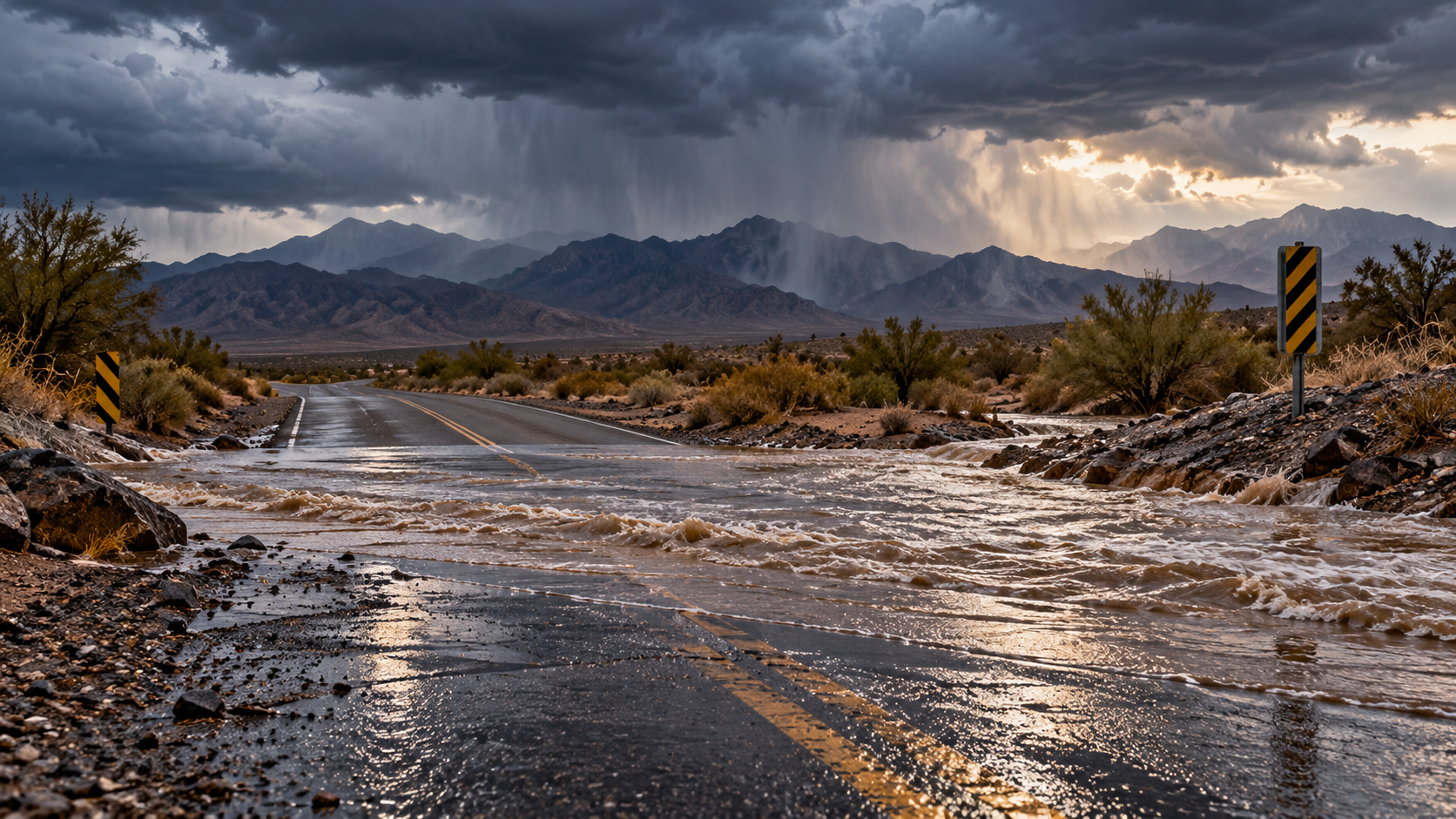
This report was checked on 15 October 2026. Its hero image is an original SearchTrends Daily editorial illustration of fictional terrain, not a photograph of Ardingly or Wimbleball, a map or a measurement of either reservoir.
A conditional editorial assessment based on the evidence available at the review date, not a guaranteed outcome.
Live record
Updates to this story
No material updates yet.

Commentary
What we think
SearchTrends Daily opinion: plain distinctions are more useful here than either reassurance without conditions or an image of imminent catastrophe. Authorities should make the affected supply areas, operational actions and customer requirements easy to tell apart.
People deserve clear dates and local instructions, while water companies remain responsible for explaining their own response. Asking customers to conserve water should sit alongside transparent reporting of the measures being taken to protect supplies and the environment. A serious warning does not become less serious when its limits are explained accurately.