UK student visa applications fall 19%: what the latest Home Office figures show
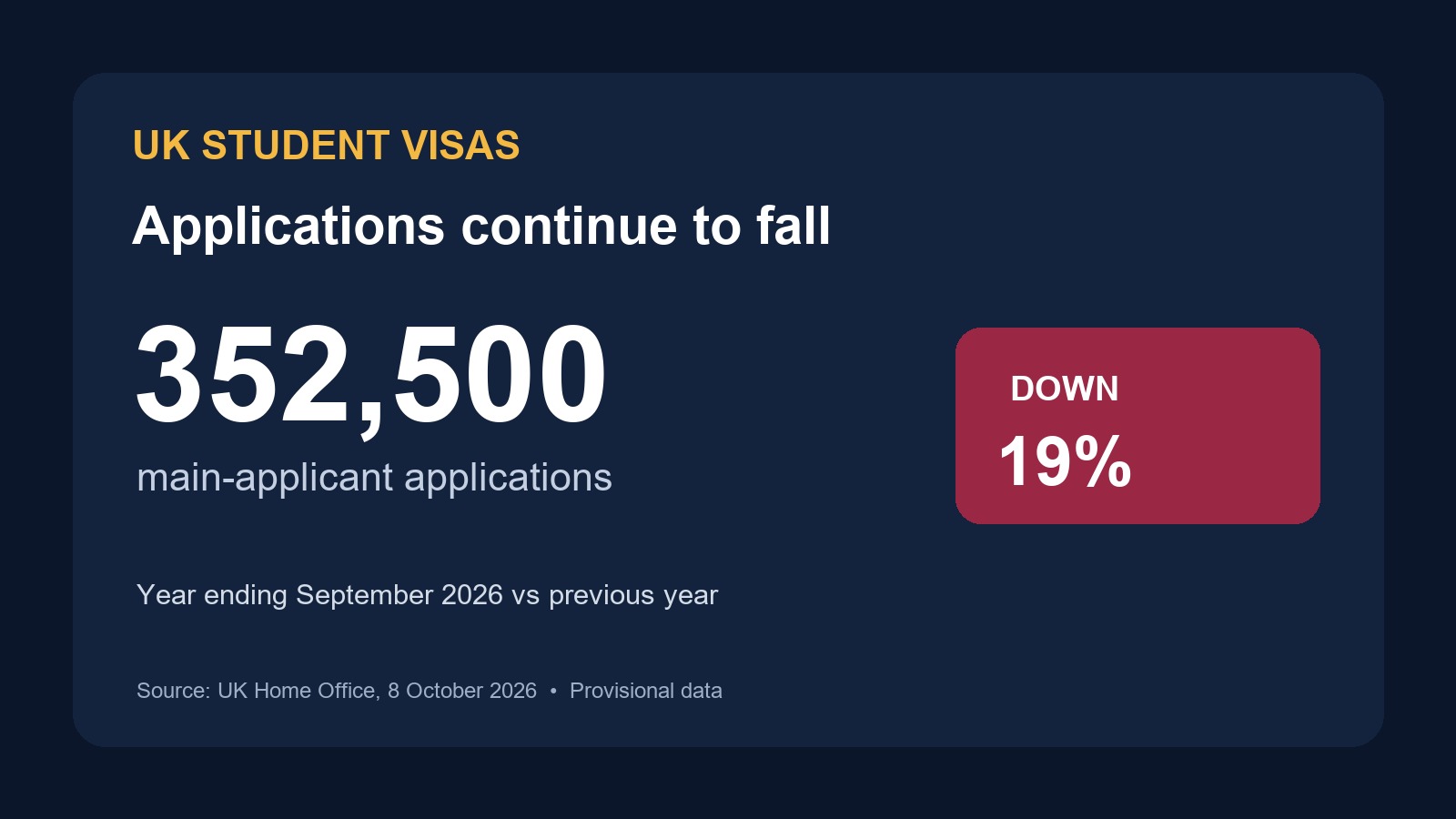
The year to September brought 352,500 sponsored study applications from main applicants, down 19%. The Home Office says the figures are provisional.
Verified brief
The story in 60 seconds
Sponsored study visa applications from main applicants fell 19% in the year ending September 2026. The decline matters for universities, but these provisional application figures do not tell us how many students enrolled.
This brief and the full story below are based on the disclosed sources. SearchTrends Daily’s interpretation appears later under “Our take.”
Full reporting
The complete story
The UK received 352,500 sponsored study visa applications from main applicants in the 12 months to September 2026, 19% fewer than in the preceding year, according to the Home Office's 8 October release. Applications from student dependants totaled 15,700, down 31%. These are applications for entry clearance, not grants, arrivals or university enrolments. The Home Office calls the monthly data provisional; final figures will appear in its quarterly statistics.
September is an important point in the academic calendar, but the Home Office warns that sponsored study applications are seasonal and typically peak in August. The year-ending comparison is therefore more useful than reading a single month in isolation. The figures establish a sustained drop in demand for this visa route; they do not establish why every applicant decided against applying.
Source perspectives
What other reporting adds
These are the reports, official records, and trend observations used to build the story. The note under each link explains exactly what it contributes.
Primary source for 352,500 main-applicant applications (down 19%), 15,700 dependant applications (down 31%), seasonality, provisional status and next update date.
Read original source ↗Office for StudentsOfS warns against persistent over-optimism as institutions face continued financial pressurePrimary regulator source for university financial pressure, volatile recruitment and reliance on international student fee income.
Read original source ↗UK Home OfficeWhy do people come to the UK? Study — year ending June 2026Primary quarterly release for the 11% year-on-year fall in sponsored study visa grants in the year to June 2026. This measures grants, not the new application series.
Read original source ↗SearchTrends Daily opinion
Our take
Analysis
What the evidence and search signal suggest
The application decline is larger than the 11% fall in sponsored study visa grants reported for the year to June 2026, but the periods and measures differ. It would be misleading to infer a matching 19% fall in student arrivals or fee revenue. The data points to pressure on the recruitment pipeline, while the eventual effect will vary by institution and source market.
Analysis and commentary are SearchTrends Daily’s interpretation. They are intentionally separated from the sourced account above.
Meaning
Why this matters
The numbers are a signal for universities planning recruitment and budgets. England's higher education regulator, the Office for Students, has warned about volatile recruitment, rising costs and reliance on international fee income. A visa application is only one step toward a student arriving and paying tuition, so institutions will need to compare the Home Office series with actual enrolment before drawing financial conclusions. For prospective students, the figures do not mean an individual application is less likely to succeed: this release counts applications, not decisions.
Background
How we got here
The decline follows several years of policy and market change. Since January 2024, most students have been unable to bring dependants; the Home Office says dependant applications are now 89% below the year ending December 2023. The latest quarterly study-visa statistics also show fewer visa grants in the year to June 2026. Those grant figures and the new application figures measure different stages and periods, so they should not be treated as interchangeable.
Outlook
What is likely to happen next
The Home Office says its next monthly update is due on 12 November 2026. The quarterly release will eventually replace these provisional counts with final figures. Watch for university enrolment data and any changes in application volumes through the next intake before calling the decline a lasting shift or a recovery.
A conditional editorial assessment based on the evidence available at the review date, not a guaranteed outcome.
Live record
Updates to this story
No material updates yet.



Commentary
What we think
Our view: policy debate should separate the number of people applying from the number admitted and the number who actually enrol. A single headline percentage is useful for spotting a change, but it is a poor substitute for those three measures when judging university finances or student outcomes.