Four sailors rescued after whale collision sank yacht Tai Tam: how an EPIRB led help to them
A New Zealand patrol aircraft located the crew 250 nautical miles north of Norfolk Island, and a cargo ship lifted them from a life raft the next morning.
Verified brief
The story in 60 seconds
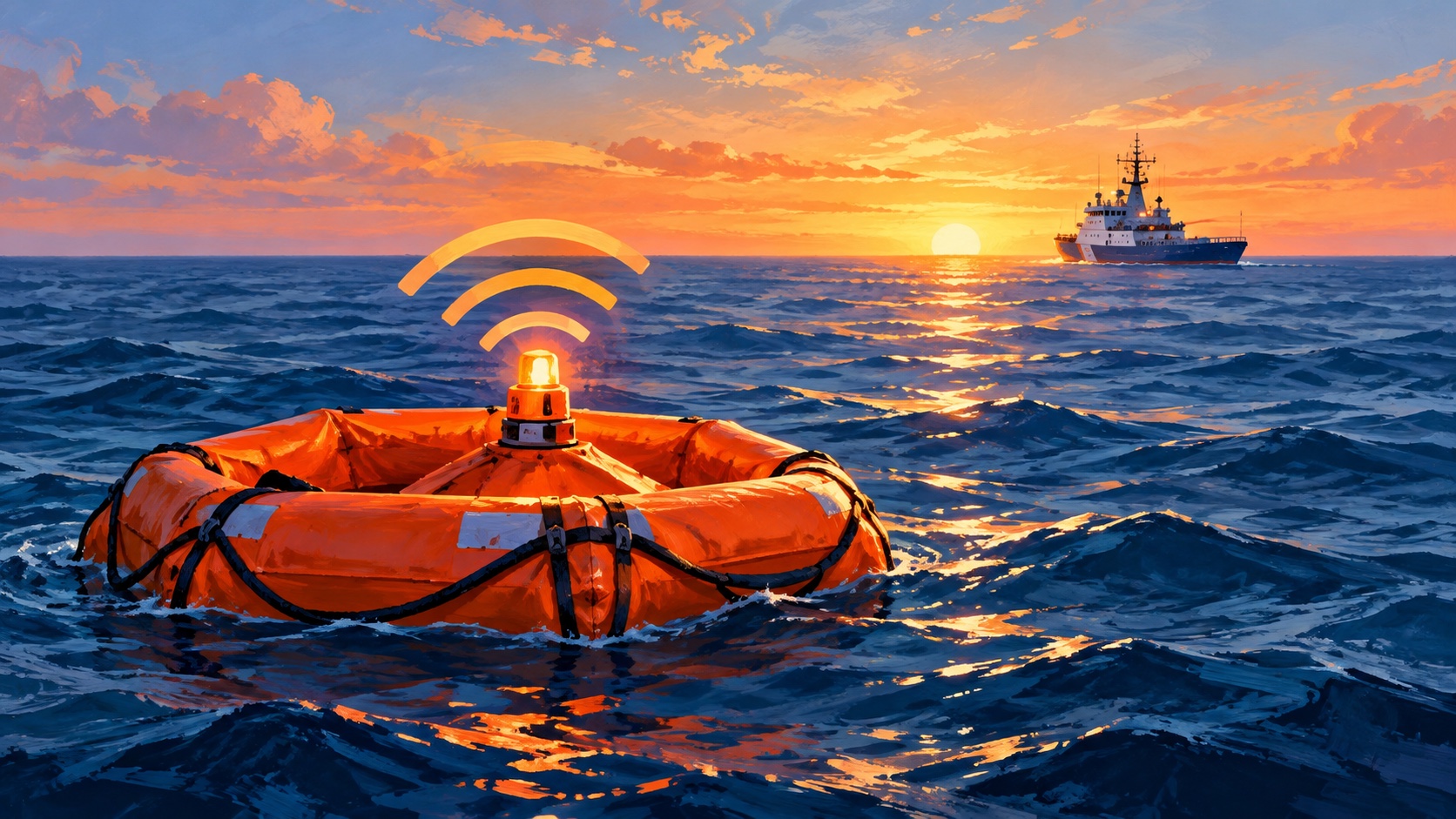
Four sailors survived after the Australian-flagged yacht Tai Tam struck a whale and began taking on water about 250 nautical miles north of Norfolk Island on Saturday, 26 September 2026. The crew activated an emergency position-indicating radio beacon, abandoned the 51-foot yacht and entered a life raft. A Royal New Zealand Air Force P-8A located them and established radio contact; the cargo ship MV Sofrana Surville rescued all four at about 6 a.m. Sunday. No loss of life was reported, while the whale's condition remains unknown.
This brief and the full story below are based on the disclosed sources. SearchTrends Daily’s interpretation appears later under “Our take.”
Full reporting
The complete story
The direct answer is that all four people aboard the yacht Tai Tam were rescued alive. Their boat did not make it: after the collision damaged the hull and steering, the crew eventually left the sinking yacht and spent the night in a life raft before a passing cargo ship reached them.
New Zealand Defence Force says Maritime New Zealand's Rescue Coordination Centre received an alert from the 51-foot Australian-flagged yacht's emergency position-indicating radio beacon at about 1 p.m. on Saturday, 26 September. The yacht was roughly 250 nautical miles north of Norfolk Island, a remote position in the South Pacific between New Zealand, New Caledonia and Australia.
The rescue centre tasked a Royal New Zealand Air Force P-8A Poseidon maritime surveillance aircraft. Its crew located the four sailors and established two-way radio communication with them while rescue authorities diverted ships in the area. The 143-metre cargo vessel MV Sofrana Surville was the first merchant ship to arrive and brought the four aboard at about 6 a.m. Sunday. That places the rescue roughly 17 hours after the beacon alert.
In interviews published later by AFP and carried by CBS News, crew members described a heavy impact that pushed the yacht sideways. They said they then saw a pod of sperm whales nearby. The collision left cracks and gashes in the fibreglass hull, damaged steering equipment and allowed water to enter. The sailors tried to control the flooding and remain aboard, but ultimately moved to the life raft.
The official rescue account describes the yacht as having hit a whale, but there is no evidence that the animal deliberately attacked the vessel. The crew's later account identifies sperm whales in the area after the impact. Search headlines that turn this into a purposeful whale attack go beyond the available evidence. The condition of the whale involved has not been reported.
The rescue succeeded because several safeguards worked in sequence. The crew activated the EPIRB early; satellites and the rescue system relayed an identifiable distress signal; the P-8A found the survivors and opened communications; regional authorities coordinated nearby vessels; and a merchant ship completed the recovery. Rescue Coordination Centre operations manager Mike Clulow said the crew was well prepared and that early beacon activation was key.
An EPIRB is a maritime distress beacon designed to alert rescue services and transmit a location. Maritime New Zealand explains that modern 406 MHz beacons send a signal through the international Cospas-Sarsat satellite system to the responsible rescue coordination centre. Registration connects the beacon identifier with vessel and emergency-contact information, while correct installation, maintenance and familiarity with manual activation determine whether it can do its job when a boat is flooding.
This was not a rescue by phone signal or chance alone. The cargo ship was able to reach a known search area because the beacon alert and aircraft search had already turned a vast ocean into a coordinated response. The survivors still faced a long wait and a difficult transfer from a small raft to a large vessel, but rescuers knew where to look and who they were trying to reach.
Source perspectives
What other reporting adds
These are the reports, official records, and trend observations used to build the story. The note under each link explains exactly what it contributes.
Primary rescue account for the yacht, location, EPIRB alert, aircraft search, radio contact, cargo-ship recovery and the rescue centre's assessment.
Read original source ↗ABC PacificSailors rescued from raft after hitting a whale pod sinks their yachtIndependent interview-based account confirming the crew's abandonment of Tai Tam, the rescue centre response and the skipper's assessment of the damage.
Read original source ↗CBS News and Agence France-PresseWhale sinks yacht in South Pacific, sailors rescued alive 18 hours laterLater interviews with the crew describing the impact, whales seen nearby, hull and steering damage, flooding and the transfer from the life raft.
Read original source ↗Maritime New ZealandEmergency beaconsOfficial safety guidance explaining EPIRB use, registration, access, maintenance and the role of emergency beacons at sea.
Read original source ↗SearchTrends Daily opinion
Our take
Analysis
What the evidence and search signal suggest
The successful outcome should not be reduced to a single gadget. The beacon provided the alert and location, but the rescue depended on redundancy: the life raft kept the crew together, the patrol aircraft provided contact, and a commercial ship supplied the recovery platform. Any link arriving late or failing would have raised the risk.
The incident also illustrates why collision narratives require restraint. The crew reported seeing sperm whales after the impact, but there is no public assessment of the animal's behaviour or condition. The confirmed story is an accidental collision followed by an effective rescue, not evidence of aggressive whale behaviour.
For readers planning offshore passages, the relevant question is whether the boat has a working, registered distress beacon, accessible life-saving equipment, a practiced abandon-ship plan and more than one way to communicate. Rare emergencies are precisely where preparation has the highest value.
Analysis and commentary are SearchTrends Daily’s interpretation. They are intentionally separated from the sourced account above.
Meaning
Why this matters
The story is attracting attention because the event is dramatic, but its most useful lesson is procedural. In an offshore emergency, the first minutes are often spent deciding whether damage can be controlled. Waiting too long to send a distress alert can turn a known position into a much wider search area as a disabled vessel or life raft drifts.
The Tai Tam crew activated the beacon while the yacht was still afloat, giving rescue authorities a starting point and time to marshal an aircraft and ships. The episode demonstrates why an EPIRB should be registered, within reach, maintained and understood before departure rather than treated as equipment that will somehow solve the emergency by itself.
Background
How we got here
EPIRB stands for emergency position-indicating radio beacon. Maritime New Zealand says an activated 406 MHz beacon is detected by the international Cospas-Sarsat satellite network and routed to the responsible rescue coordination centre. A float-free installation can release and activate automatically after immersion, while other models require manual deployment.
Rules vary by vessel, country and operating area. Maritime New Zealand's general guidance stresses choosing the right beacon, registering it, keeping contact details current and storing it where it is accessible. That is a safety principle, not a claim that every recreational boat must carry the same model in every jurisdiction.
Outlook
What is likely to happen next
Investigators or maritime authorities may later clarify the yacht's damage, the exact collision sequence and whether there was any evidence about the whale's condition. Our assessment would change if an official investigation contradicted the crew's account, established a different cause of the hull failure or reported that the whale was injured.
For boaters, the immediate practical checkpoint is simple: confirm the beacon is the correct current type for the operating area, registered to the right vessel and contacts, within its battery life and installed where it can be reached or float free as designed. Read the manufacturer's instructions and the relevant national maritime-safety guidance before departure. Those checks do not prevent every collision, but they can determine how quickly a remote emergency becomes a coordinated rescue.
A conditional editorial assessment based on the evidence available at the review date, not a guaranteed outcome.
Live record
Updates to this story
No material updates yet.


Commentary
What we think
SearchTrends Daily opinion: The rescue agencies are right to emphasise early EPIRB activation rather than the spectacle of a yacht and a whale colliding. The best outcome came from the crew recognising that the situation was serious, alerting authorities and preserving options before the yacht disappeared. The missing part of the public record is the whale's fate. Coverage should avoid celebrating the human rescue in a way that implies the animal was a villain or that its condition does not matter.