Is daylight saving time permanent now? What the House vote actually changed
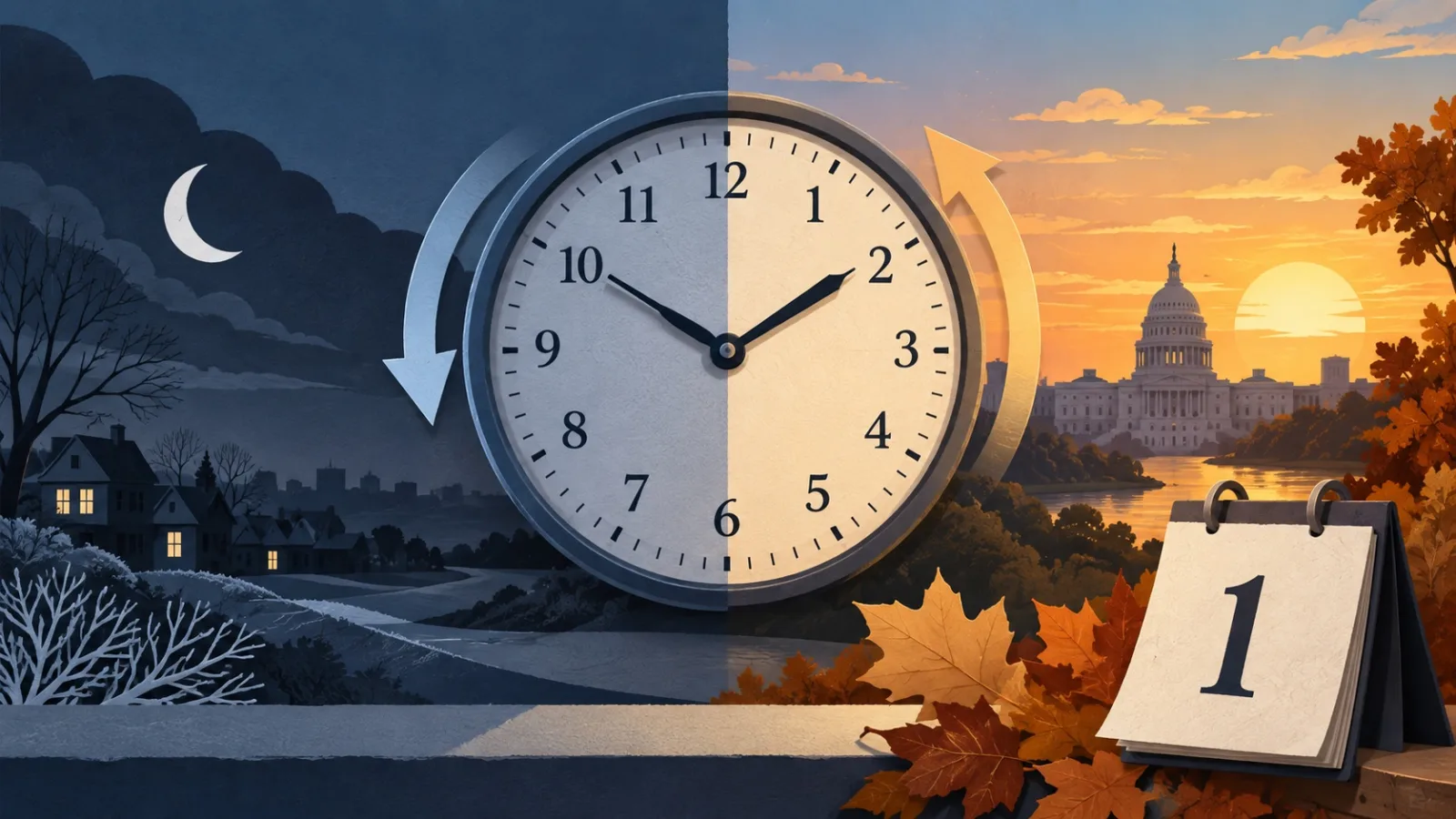
The United States still returns to standard time on November 1, 2026. A House-passed bill would end the clock change, but it has not become law.
Verified brief
The story in 60 seconds
No. Daylight saving time is not yet permanent across the United States. Under the current federal schedule, daylight saving time runs from March 8 to November 1 in 2026. The House approved H.R. 139, the Sunshine Protection Act, on July 14 by 308–117, but the Senate must also pass it and the president must sign it before the national rule changes.
This brief and the full story below are based on the disclosed sources. SearchTrends Daily’s interpretation appears later under “Our take.”
Full reporting
The complete story
Search interest has risen around states passing daylight-saving laws and whether Americans will change their clocks this fall. The immediate answer is practical: most of the country should still set clocks back one hour on Sunday, November 1, 2026. NIST’s current schedule says daylight saving time ends at 2 a.m. local time that day.
The confusion follows a real legislative development. On July 14, the House passed H.R. 139, the Sunshine Protection Act, by a bipartisan 308–117 vote. The House-approved text would make the daylight-saving offset permanent rather than extending the present March-to-November season. But House passage is one stage of the federal process, not a change to the clocks by itself. Associated Press reporting after the vote said Senate passage was still required before the measure could be sent to the president.
That distinction matters because state action operates inside federal limits. The Department of Transportation says states may exempt themselves from daylight saving time and remain on standard time. Current federal law does not let a state simply choose permanent daylight time on its own. State trigger laws supporting year-round daylight time therefore wait on Congress; they do not cancel the November 2026 clock change.
Source perspectives
What other reporting adds
These are the reports, official records, and trend observations used to build the story. The note under each link explains exactly what it contributes.
Official 2026 daylight-saving schedule and federal rule overview.
Read original source ↗U.S. Department of TransportationDaylight Saving TimeFederal oversight and the state exemption available under the Uniform Time Act.
Read original source ↗U.S. House Committee on Energy and CommerceHouse Passes Legislation to Make Daylight Saving Time PermanentOfficial committee account of the July 14, 2026 House passage of H.R. 139.
Read original source ↗GovInfoH.R. 139 — Sunshine Protection Act of 2025, engrossed in HouseOfficial text and House-passed status of the bill.
Read original source ↗Associated PressHouse passes bill to ditch the switch and make daylight saving time permanentIndependent reporting on the vote, the remaining Senate step and arguments on both sides.
Read original source ↗Associated PressAmerica already tried permanent daylight saving time. It lasted less than a yearHistorical context on the 1970s experiment and the present debate.
Read original source ↗SearchTrends Daily opinion
Our take
Analysis
What the evidence and search signal suggest
The strongest case for permanent daylight time is simplicity plus later evening light. Ending the twice-yearly switch would remove a recurring scheduling disruption, and many households value usable daylight after work or school. Businesses tied to outdoor activity can make the same argument.
The strongest objection is not nostalgia for changing clocks; it is winter morning darkness. Making daylight time permanent does not create more sunlight. It moves the clock label attached to the same daylight. A 7:30 a.m. standard-time sunrise becomes an 8:30 a.m. daylight-time sunrise. That can shift risk and inconvenience toward students, early workers and morning travel.
The House vote settles neither side of that policy debate. It establishes that a large bipartisan majority was willing to advance one answer. The still-relevant questions are whether the Senate will take up the same text, whether amendments will change it and what implementation timetable would give transport, software and international schedules enough notice.
Analysis and commentary are SearchTrends Daily’s interpretation. They are intentionally separated from the sourced account above.
Meaning
Why this matters
A clock rule sounds minor until it changes the relationship between school mornings, commutes, business hours and daylight. Permanent daylight time would preserve more evening light in winter, but it would also delay winter sunrise by an hour compared with standard time. That trade-off becomes sharper farther north and on the western edge of a time zone.
The search question is also a useful test of how to read legislation. “The House passed a bill” is not the same as “the law changed.” People planning travel, device schedules, transport timetables or shift work need the operative rule, not the most dramatic headline about a proposal.
Background
How we got here
The United States has tried year-round daylight time before. During the 1970s energy crisis, Congress moved to extended daylight time, but the experiment was cut short amid public concern about dark winter mornings. That history does not prove the same outcome today: commuting patterns, remote work and technology have changed. It does show why the morning-versus-evening trade-off is not merely theoretical.
The modern federal schedule was extended in 2007. For participating states, clocks move forward on the second Sunday in March and back on the first Sunday in November. Hawaii and most of Arizona remain on standard time under the existing exemption framework.
Outlook
What is likely to happen next
For now, the evidence to watch is procedural, not speculative. A Senate vote on H.R. 139 or companion legislation would materially change the outlook; passage of identical text would move the question to the president. Amendments could require another House vote. An enacted law and an official implementation date would change this article’s answer.
Absent those developments, the next nationwide change for participating states remains Sunday, November 1, 2026, when clocks return to standard time. Readers should still check local rules because Hawaii and most of Arizona do not observe the seasonal switch.
A conditional editorial assessment based on the evidence available at the review date, not a guaranteed outcome.
Live record
Updates to this story
No material updates yet.



Commentary
What we think
SearchTrends Daily opinion: Congress should state the transition date and implementation plan as clearly as the policy choice itself. A late change would create avoidable confusion for schools, airlines, calendar systems and people who coordinate across time zones. Until a bill completes the full legislative process, public agencies and publishers should keep saying plainly that the existing clock-change schedule remains in force.