A century-old Isle of Wight fossil reveals Europe’s first known megaraptoran
Researchers identified a new long-clawed dinosaur from a skull fragment held by London’s Natural History Museum since 1924.
Verified brief
The story in 60 seconds
A long-overlooked Isle of Wight skull fragment has been named Invictibellatrix amberina. The study offers the first identified megaraptoran fossil from Europe and new evidence about how the group spread.
This brief and the full story below are based on the disclosed sources. SearchTrends Daily’s interpretation appears later under “Our take.”
Full reporting
The complete story
A fragment of dinosaur skull kept in the Natural History Museum’s collection since 1924 has been identified as a previously unknown meat-eating species. Researchers at University College London and the museum named it Invictibellatrix amberina in a paper published in Royal Society Open Science on 14 October. The fragment was found on the Isle of Wight. According to UCL, it is the first megaraptoran identified in Europe.
The team CT-scanned the back of the skull and compared its braincase features with those of other two-legged predators. A distinctive combination of features and a computer analysis of evolutionary relationships led them to place it among the megaraptorans. UCL estimates the animal lived about 120 million years ago in the Early Cretaceous. Its estimated three-to-four-metre length and likely feathers and long claws are reconstructions based on relatives; the fossil itself is only part of a skull.
The primary paper identifies the specimen as NHMUK PV R6775 and records its museum acquisition in May 1924. It says the fossil had never been formally described. The precise original rock horizon is unknown; its placement in lower Wessex Formation beds is an inference. The CT-derived endocast reconstructs spaces within the bone, not a preserved brain.
Source perspectives
What other reporting adds
These are the reports, official records, and trend observations used to build the story. The note under each link explains exactly what it contributes.
Primary research announcement: identification, CT analysis, size estimates, date, and limits of the fossil.
Read original source ↗Natural History MuseumUK dinosaur fossil identified as new long-clawed predatorPrimary museum account of the historic specimen, research team, and scientific interpretation.
Read original source ↗ITV NewsNew species of dinosaur discovered from fossil overlooked for over 100 yearsIndependent news reporting (PA Media, published by ITV on 14 October) on the newly described Isle of Wight species; not an independent scientific replication. Link repaired during the 15 October primary-paper review after the previous URL returned Page not found. The full underlying report was read.
Read original source ↗Wikimedia CommonsBrighstone Bay, Isle of Wight, UK — photograph by MypixArchival hero image source and photographer attribution; the photo does not show this fossil or the exact find spot.
Read original source ↗Creative CommonsCreative Commons Attribution-ShareAlike 4.0 InternationalLicense for Mypix Brighstone Bay photograph; the published image is displayed in a browser screenshot with side margins.
Read original source ↗Royal Society Open Science — Morrison et al.A new megaraptoran dinosaur from the Lower Cretaceous Wessex Formation, UK, and its implications for theropod evolution and biogeographyDirect study dated 14 October 2026: specimen NHMUK PV R6775, museum acquisition record in May 1924, uncertain original rock horizon, CT-derived endocast and differing phylogenetic/biogeographical analyses. Added at the 15 October primary-source review; the proposed dispersal route and higher-level relationships remain interpretations, not a uniquely settled history.
Read original source ↗SearchTrends Daily opinion
Our take
Analysis
What the evidence and search signal suggest
The discovery strengthens, but does not settle, the idea that megaraptorans passed through Europe before becoming widespread farther south. A single skull fragment cannot establish a complete migration route. More fossils and independent analyses could refine both the family tree and the timing.
Direct review of the paper adds that different evolutionary datasets produce different relationships and geographical histories. The authors acknowledge ambiguous origins before favouring an Asian population spreading into Europe and subsequently towards southern landmasses. They also stress uncertainty about the higher-level position of Megaraptora. Their preferred route is a model interpretation, not a uniquely established itinerary.
Analysis and commentary are SearchTrends Daily’s interpretation. They are intentionally separated from the sourced account above.
Meaning
Why this matters
The authors identify this as the first described megaraptoran fossil from Europe, filling a gap in one proposed route between early members of the group in Asia and later giant predators in southern continents. It also shows that collections already held by museums can still change the scientific record when studied with new methods.
Background
How we got here
Megaraptorans were two-legged carnivores with large arms and curved claws. Researchers have found members of the group elsewhere, especially in southern landmasses, but Europe had been a missing piece of the fossil record. The Isle of Wight is a well-known source of Early Cretaceous dinosaur remains. The new species is based on a single partial skull, so its appearance and ecology are inferred rather than directly observed.
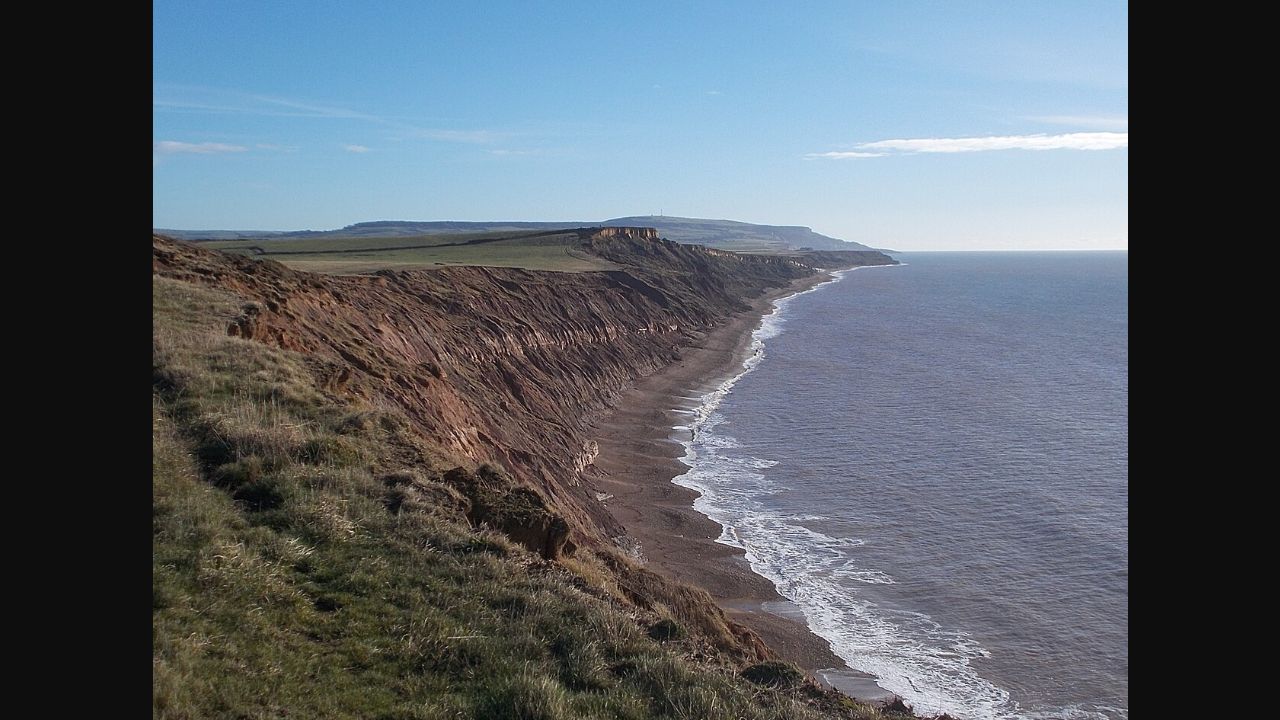
Image: Archival view of Brighstone Bay on the Isle of Wight, not the fossil or its exact discovery spot. Photo by Mypix via Wikimedia Commons, CC BY-SA 4.0.
Outlook
What is likely to happen next
Researchers may re-examine other historic Isle of Wight specimens for comparable features and test the proposed evolutionary placement as new fossils appear. The study does not identify why megaraptorans later disappeared from northern regions.
A conditional editorial assessment based on the evidence available at the review date, not a guaranteed outcome.
Live record
Updates to this story
Primary-paper review clarifies collection record and model uncertainty
Correction and clarification — 15 October 2026. Direct review of Morrison et al. in Royal Society Open Science (https://doi.org/10.1098/rsos.260937; published 14 October) found a conflict in the collection history. The Natural History Museum announcement names Reginald Walter Tooley, while the paper records acquisition from Rev. R.W. Hooley in May 1924. We have not resolved that discrepancy against the museum accession register. We have therefore removed the collector name and the associated after-death wording from the main account, retaining the specimen identifier NHMUK PV R6775 and the paper’s dated acquisition record. Superseded paragraph, retained here as the correction history: “The Natural History Museum says the specimen came from the collection of amateur palaeontologist Reginald Walter Tooley. It was acquired after his death and remained unrecognised as a new species for nearly a century.” The revised account also states that the exact original rock horizon is unknown and that the CT-derived endocast reconstructs spaces inside bone, not a preserved brain. The analysis now explains that the authors’ preferred dispersal route is one model interpretation, with different datasets producing different relationships and geographical histories and higher-level evolutionary placement remaining uncertain. We have not treated the paper and its associated university/museum announcements as independent scientific replications. The original publication date, stable URL, byline and relevant archival image are unchanged. Further accession-record evidence or new independent fossil analyses would warrant another dated update. Source-link repair in the same review: the ITV citation previously omitted “over” from its URL and returned Page not found. It now points to the full PA Media report on ITV that we read; no new scientific corroboration is implied by that repair.



Commentary
What we think
The striking part of this story is the century between collection and recognition. It is a reminder that fieldwork and museum stewardship work together: preserving a specimen can make a future discovery possible even when its importance is not immediately apparent.