Aurora watch: northern UK and southern New Zealand could see lights this week
The Met Office says clear skies could allow sightings in Scotland, northern England and southern New Zealand on some nights from October 11 to 13.
Verified brief
The story in 60 seconds
A solar disturbance raises the chance of aurora, but visibility depends on cloud, darkness and the strength of the geomagnetic response.
This brief and the full story below are based on the disclosed sources. SearchTrends Daily’s interpretation appears later under “Our take.”
Full reporting
The complete story
A fresh Met Office space-weather forecast, issued at 14:42 GMT on Sunday, October 11, says aurora sightings are possible across Scotland and northern England between October 11 and 13 where skies are clear. The same forecast points to a chance of sightings across southern New Zealand on those dates. It is a forecast of possible visibility, not a report that the lights have been seen in either place.
The agency attributes the elevated chance to glancing coronal mass ejections followed by a faster stream of solar wind from a coronal hole. It expects minor geomagnetic storms, with a chance of moderate intervals. NOAA’s Space Weather Prediction Center forecast issued at 12:30 UTC on October 11 likewise expected G1 to G2 geomagnetic conditions on October 11 and 12.
For people hoping to look, the Met Office advises finding a dark place with a clear view toward the northern horizon in the UK. Cloud cover and light pollution can obscure any display. Its current forecast is the best place to check before travelling or staying up late; the strength and timing of solar activity can change. The Met Office page also said there were no active space-weather notifications when reviewed.
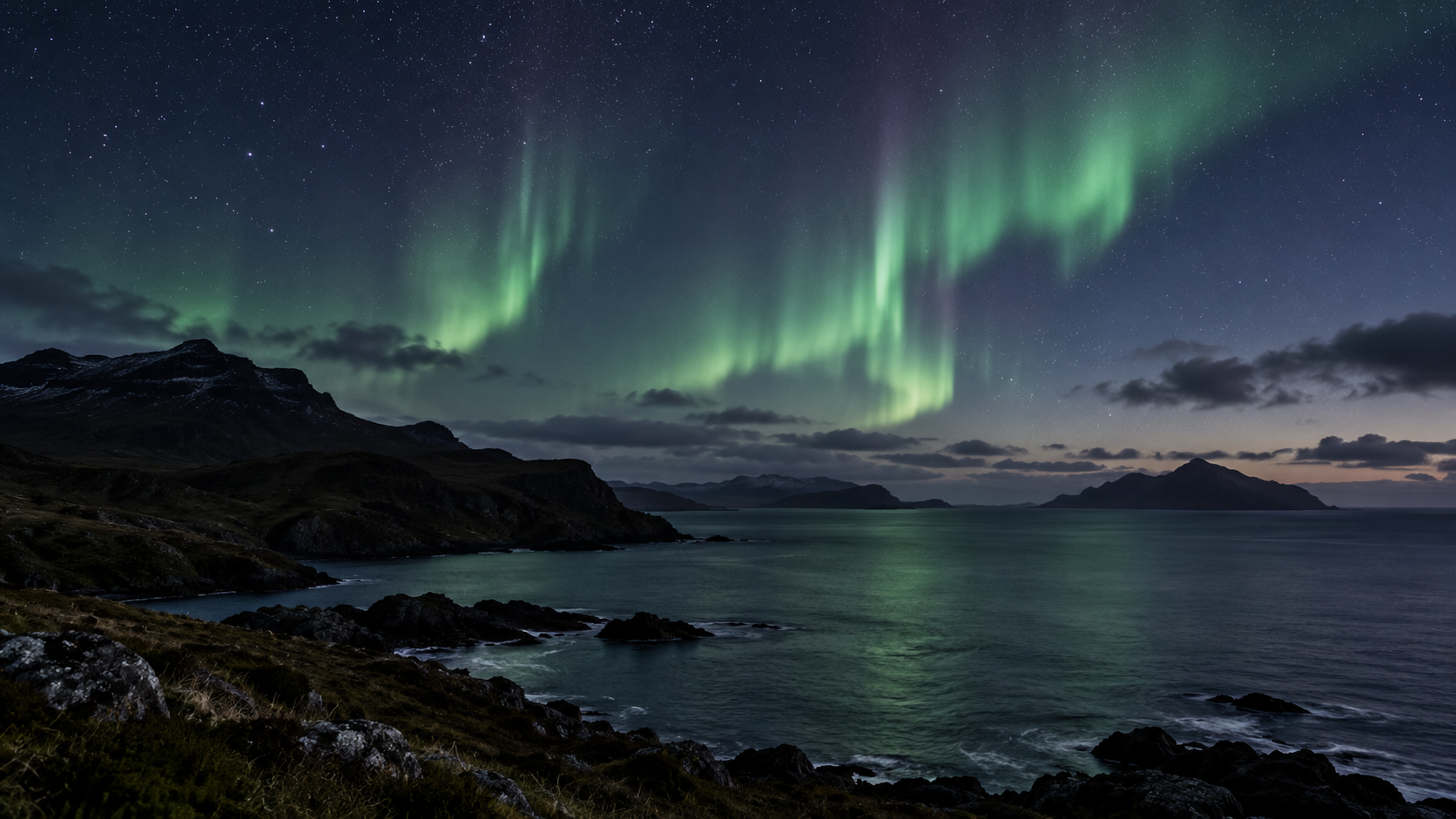
Image: SearchTrends Daily conceptual illustration generated with AI; it is not a photograph of an October 2026 sighting.
Source perspectives
What other reporting adds
These are the reports, official records, and trend observations used to build the story. The note under each link explains exactly what it contributes.
Primary, time-stamped forecast naming northern UK and southern New Zealand viewing areas and the G1–G2 outlook.
Read original source ↗NOAA Space Weather Prediction Center3-Day Forecast issued October 11, 2026Independent primary forecast of G1–G2 geomagnetic conditions on October 11–12.
Read original source ↗Met OfficeNorthern lights: when and where to see themExplains the aurora and practical viewing conditions including darkness, cloud and location.
Read original source ↗SearchTrends Daily opinion
Our take
Analysis
What the evidence and search signal suggest
The forecast supports a plausible viewing opportunity over several nights, with potential strength varying from minor to moderate geomagnetic storm conditions. It does not establish where a display will actually be visible at a particular hour. Local cloud cover may be as important to a viewer as the space-weather forecast.
Analysis and commentary are SearchTrends Daily’s interpretation. They are intentionally separated from the sourced account above.
Meaning
Why this matters
A rise in searches for the northern lights can be useful when it directs readers to a current official forecast. The geographic detail matters: the Met Office names Scotland and northern England, plus southern New Zealand, as possible viewing areas rather than promising a nationwide display.
Background
How we got here
Auroras appear when charged particles associated with solar activity interact with Earth’s magnetic field and upper atmosphere. The Met Office says stronger geomagnetic activity can push visible displays farther from the poles. In Britain, dark and clear skies are still essential even when the auroral oval expands.
Outlook
What is likely to happen next
The Met Office will refresh its space-weather outlook as solar-wind measurements arrive. Anyone considering a viewing trip should recheck that outlook and a local cloud forecast close to departure. The chance of a sighting may rise or fall as new data comes in.
A conditional editorial assessment based on the evidence available at the review date, not a guaranteed outcome.
Live record
Updates to this story
No material updates yet.


Commentary
What we think
Our view: the useful headline is a chance to watch, not a promise of lights. Readers should be able to see both the official forecast window and the conditions that could prevent a sighting before making plans.