Verstappen wins rain-hit Bahrain GP in Malaysia as Russell retires
Max Verstappen recovered from losing the lead at the start to beat Kimi Antonelli, while Lewis Hamilton completed the podium after a chaotic delayed race at Sepang.
Verified brief
The story in 60 seconds
Max Verstappen won the 2026 Bahrain Grand Prix in Malaysia at Sepang, finishing 2.307 seconds ahead of championship leader Kimi Antonelli. Lewis Hamilton recovered from a poor slick-tyre start to take third, while George Russell retired late. The race kept the Bahrain Grand Prix name because Formula 1 and the FIA moved the event to Malaysia for 2026.
This brief and the full story below are based on the disclosed sources. SearchTrends Daily’s interpretation appears later under “Our take.”
Full reporting
The complete story
Max Verstappen won the 2026 Bahrain Grand Prix in Malaysia on October 4, taking his and Red Bull’s first victory of the season after a rain-disrupted race at Sepang International Circuit. Kimi Antonelli finished second for Mercedes, 2.307 seconds behind, and Lewis Hamilton was third for Ferrari at 4.919 seconds.
The unusual event name is deliberate. Formula 1 and the FIA announced in July that Malaysia would host the Bahrain Grand Prix from October 2 to 4 at Sepang. The arrangement preserved the Bahrain round on the calendar while moving the race itself to Malaysia.
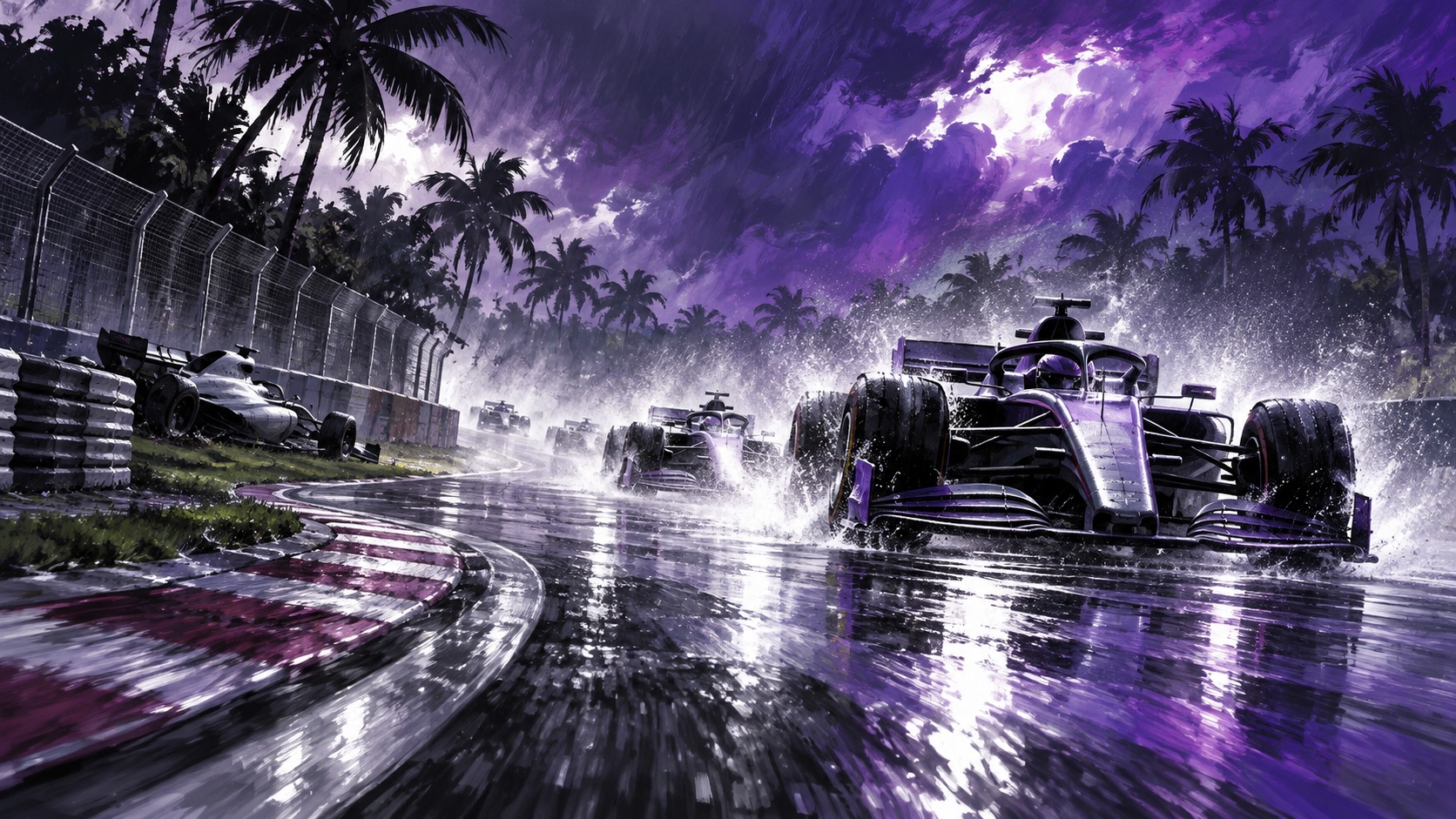
Heavy rain delayed the scheduled start by 40 minutes. When the formation process began, several cars suffered problems that left throttle inputs ineffective, prompting Race Control to suspend the procedure for a further 53 minutes. Nine drivers ultimately chose intermediate tyres for the start; others, including Hamilton, Charles Leclerc, Lando Norris and Oscar Piastri, gambled on slicks.
Antonelli and George Russell launched past polesitter Verstappen to give Mercedes a one-two into Turn 1. Verstappen recovered quickly, passing Russell and then pressuring Antonelli. Valtteri Bottas spun on slick tyres and brought out a Safety Car, giving the intermediate runners a timely chance to switch to dry-weather tyres.
Verstappen worked his way back into first place and then controlled the race through changing conditions. A late stoppage involving Alex Albon triggered another Safety Car phase, but Verstappen kept Antonelli behind at the restart and completed 55 classified laps in 1:47:14.808.
Russell’s race ended dramatically when his Mercedes stopped on the start-finish straight in the closing stages. That retirement promoted the recovering Ferraris. Hamilton, who had fallen toward the back after starting on slick tyres, climbed to third; Leclerc finished fourth after also recovering from the wrong opening tyre and an early front-wing change. Isack Hadjar was fifth for Red Bull.
Oscar Piastri finished sixth, followed by Liam Lawson and Fernando Alonso. Lando Norris was ninth after running through the gravel behind the late Safety Car, and Arvid Lindblad took the final point in 10th. The official classification lists Russell, Albon and Bottas as the three non-finishers.
Source perspectives
What other reporting adds
These are the reports, official records, and trend observations used to build the story. The note under each link explains exactly what it contributes.
Official race report for the delayed start, tyre strategies, Safety Cars, scoring sequence, final order and next round.
Read original source ↗Fédération Internationale de l’AutomobileF1 – Verstappen wins dramatic Bahrain Grand Prix in Malaysia ahead of Antonelli and HamiltonGoverning-body account and classification for the 55-lap result, margins, weather and start delays, and Red Bull Ford Powertrains’ first win.
Read original source ↗Formula 1Formula 1 and FIA confirm that Malaysia will join the 2026 calendar as host venue for the Bahrain Grand PrixPrimary announcement explaining why the Bahrain Grand Prix retained its name while being staged at Sepang from October 2–4.
Read original source ↗Motorsport.comF1 Bahrain GP in Malaysia: Max Verstappen wins in chaos as George Russell retiresIndependent race report cross-checking the software disruption, tyre choices, Verstappen’s recovery and Russell’s late retirement.
Read original source ↗SearchTrends Daily opinion
Our take
Analysis
What the evidence and search signal suggest
The outcome turned on two recoveries. Verstappen lost the lead to both Mercedes cars at the standing start, but his intermediate tyres kept him in the correct strategic group and allowed him to attack rather than wait for the circuit to rescue an early gamble. He passed Russell, stayed close to Antonelli and used the Bottas Safety Car window to move onto slicks without the time loss faced by drivers who had chosen them too soon.
Hamilton’s route was the reverse. Ferrari’s slick gamble initially pushed him down the order, so third place required both pace and a sequence of overtakes. Russell’s retirement ultimately opened the podium place, but Hamilton still had to recover far enough to inherit it. Leclerc’s fourth reinforced the point: Ferrari made the wrong call for the start and then extracted a strong result from the remaining race.
Antonelli’s second place may be the most valuable championship drive. He beat Russell at the start, kept Verstappen within 2.307 seconds at the finish and avoided the errors that caught several experienced drivers. The result did not produce a win, but it widened a lead that is now large enough to change how Mercedes manages risk across the final seven rounds.
Analysis and commentary are SearchTrends Daily’s interpretation. They are intentionally separated from the sourced account above.
Meaning
Why this matters
This was Verstappen’s first win of 2026 and the 72nd victory of his Formula 1 career. It was also the first win for the new Red Bull Ford Powertrains project, giving the team a concrete result after a season spent trying to turn progress into a victory.
The bigger championship consequence belonged to Antonelli. Second place extended his lead over Russell to 84 points with seven rounds remaining. Russell had arrived needing to reduce the deficit; instead, a late technical failure turned what had been a Mercedes podium into a major points swing.
Ferrari’s recovery matters because Hamilton and Leclerc were both placed near the back by their opening tyre choice. Finishing third and fourth did not make the gamble correct, but it limited the damage and showed that the car had enough pace to pass through the field once conditions stabilised.
The event also marked Formula 1’s return to racing at Sepang, a circuit last used by the championship in 2017. The rain, tyre crossover and long straights immediately restored the uncertainty for which the Malaysian venue is remembered.
Background
How we got here
The 2026 Bahrain Grand Prix was originally scheduled for Sakhir in April. Formula 1 later confirmed that the Bahrain and Saudi Arabian rounds would not take place in April because of the situation in the Middle East. In July, Formula 1 and the FIA announced that the Bahrain event would instead be hosted at Sepang in October under the name Formula 1 Gulf Air Bahrain Grand Prix in Malaysia.
Sepang staged the Malaysian Grand Prix from 1999 through 2017. Verstappen won the final race there in 2017, making Sunday’s result his second consecutive Formula 1 victory at the circuit despite the nine-year gap.
The race was round 16 of the 2026 championship. Antonelli entered as the points leader, with Russell his nearest challenger after winning the previous round in Azerbaijan. Verstappen had taken his first pole of the season at Sepang but had not yet won a race in 2026.
Outlook
What is likely to happen next
Formula 1 moves directly to the Singapore Grand Prix at Marina Bay from October 9 to 11. The short turnaround gives Red Bull an immediate chance to test whether its Sepang progress carries to a slower street circuit, while Mercedes must establish the cause of Russell’s stoppage.
Evidence that would strengthen the view of a genuine Red Bull breakthrough would include competitive long-run pace in Singapore, another clean qualifying performance and Verstappen challenging without weather or Safety Car assistance. Evidence that would weaken it would be a return to the earlier gap in dry conditions.
For the championship, Antonelli can increasingly prioritise reliable points over unnecessary risks. That assessment would change if Russell begins cutting the 84-point margin across consecutive races or if Mercedes identifies a reliability issue that threatens both cars. Ferrari’s next test is whether Hamilton and Leclerc can qualify and start on the correct strategy rather than needing another recovery drive.
A conditional editorial assessment based on the evidence available at the review date, not a guaranteed outcome.
Live record
Updates to this story
No material updates yet.


Commentary
What we think
SearchTrends Daily’s view is that the race should be read as evidence of Red Bull’s improvement without declaring the 2026 competitive order solved. Verstappen and the team made the right decisions in an unusual wet-to-dry contest, and he converted them into a controlled win. One chaotic weekend, however, does not erase Antonelli’s 84-point championship advantage or prove Red Bull will be fastest in normal conditions.
The clearest lasting signal is decision quality under pressure. Verstappen recovered from a poor start without forcing the race; Antonelli protected a major points haul; Ferrari repaired an early strategic mistake. Russell’s failure, by contrast, shows how quickly a technical problem can overwhelm an otherwise competitive weekend.