United moves to restrict unauthorised third-party AI agents
The airline’s November 11 statement covers direct access and travel-distribution channels. It cites account security and check-in compliance concerns.
Verified brief
The story in 60 seconds
United says it is taking steps to prohibit unauthorised third-party personal AI agents from accessing its services, including indirectly through travel agencies and aggregators. Reuters corroborates the announcement. The statement describes risks and planned policy changes, rather than reporting a specific customer-data breach.
This brief and the full story below are based on the disclosed sources. SearchTrends Daily’s interpretation appears later under “Our take.”
Full reporting
The complete story
United announced on November 11 that it was taking steps to restrict access by unauthorised third-party personal AI agents and assistants. It said the work covers its own digital platforms and indirect access through travel agencies and aggregators, with updates to booking, ticketing and distribution policies.
The airline cited the possibility that sharing account credentials could expose information or permit unintended purchases, account changes or use of MileagePlus miles. It also raised concerns about automated check-in and the human acknowledgment required concerning prohibited baggage items. These are United’s stated concerns, not findings in this article that an incident occurred or a regulator ruled against a particular tool.
Reuters independently reported the restrictions and their stated security rationale. United’s wording concerns unauthorised third-party personal agents; it does not describe a ban on every use of artificial intelligence.
Source perspectives
What other reporting adds
These are the reports, official records, and trend observations used to build the story. The note under each link explains exactly what it contributes.
November 11 primary statement: unauthorised personal-agent scope, direct and indirect channels, stated risks and planned policy and Trust Center updates.
Read original source ↗Reuters via Investing.comUnited Airlines moves to block AI agents from its platform over security concernsNovember 11 independent reporting corroborates the announcement and provides broader AI-agent access context.
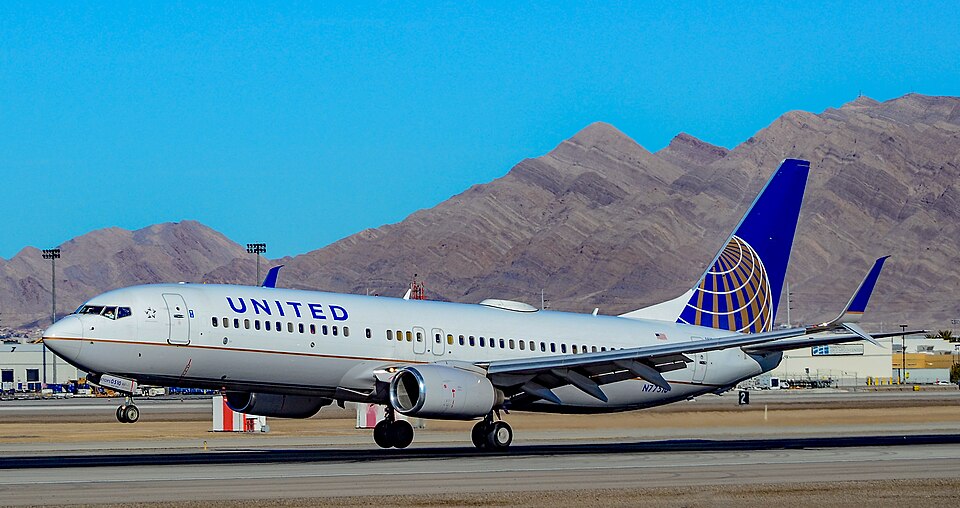
Read original source ↗Wikimedia Commons / Tomás Del CoroN77510 United Airlines Boeing 737-824 s n 32828 (45942951145).jpgArchive image source, January 18, 2019 capture date, creator and CC BY-SA 2.0 licence.
Read original source ↗SearchTrends Daily opinion
Our take
Analysis
What the evidence and search signal suggest
Our assessment: the practical scope depends on the policies and implementation that follow the announcement. A statement of intended restrictions is not evidence that every technical route has already been blocked, and a cited risk is not proof that all third-party assistants cause that harm.
Analysis and commentary are SearchTrends Daily’s interpretation. They are intentionally separated from the sourced account above.
Meaning
Why this matters
An assistant’s ability to perform a task and a service’s permission for it to do so are separate issues. This announcement shows how an airline can set boundaries around tools acting on customer accounts, including through intermediaries.
Background
How we got here
Reuters places the move within a broader split over AI agents: some companies restrict automated access, while others pursue partnerships. This report covers United’s announcement and does not infer that other airlines have adopted the same policy.
Outlook
What is likely to happen next
United says it will update its Digital Trust Center with explanations of the restrictions and information about unintended agent actions. Its statement also says it will continue evaluating how personal AI assistants interact with its services.
Image credit: Tomás Del Coro, via Wikimedia Commons, CC BY-SA 2.0 (https://creativecommons.org/licenses/by-sa/2.0/). Archive photograph of United Airlines Boeing 737-824 N77510 at Las Vegas on January 18, 2019. Resized and displayed with the site’s crop; adaptations remain available under the same licence. Airline context only, not the November 2026 announcement, an AI interface or an incident photograph.
A conditional editorial assessment based on the evidence available at the review date, not a guaranteed outcome.
Live record
Updates to this story
No material updates yet.


Commentary
What we think
Clear permission boundaries are part of making delegated actions understandable.