Sainsbury’s £3 Healthy Start top-up: eligibility and November 9 deadline
This is an opt-in six-week trial, not a new rule for every shopper. A past Healthy Start and Nectar transaction matters, and each weekly eGift has a seven-day use condition.
Verified brief
The story in 60 seconds
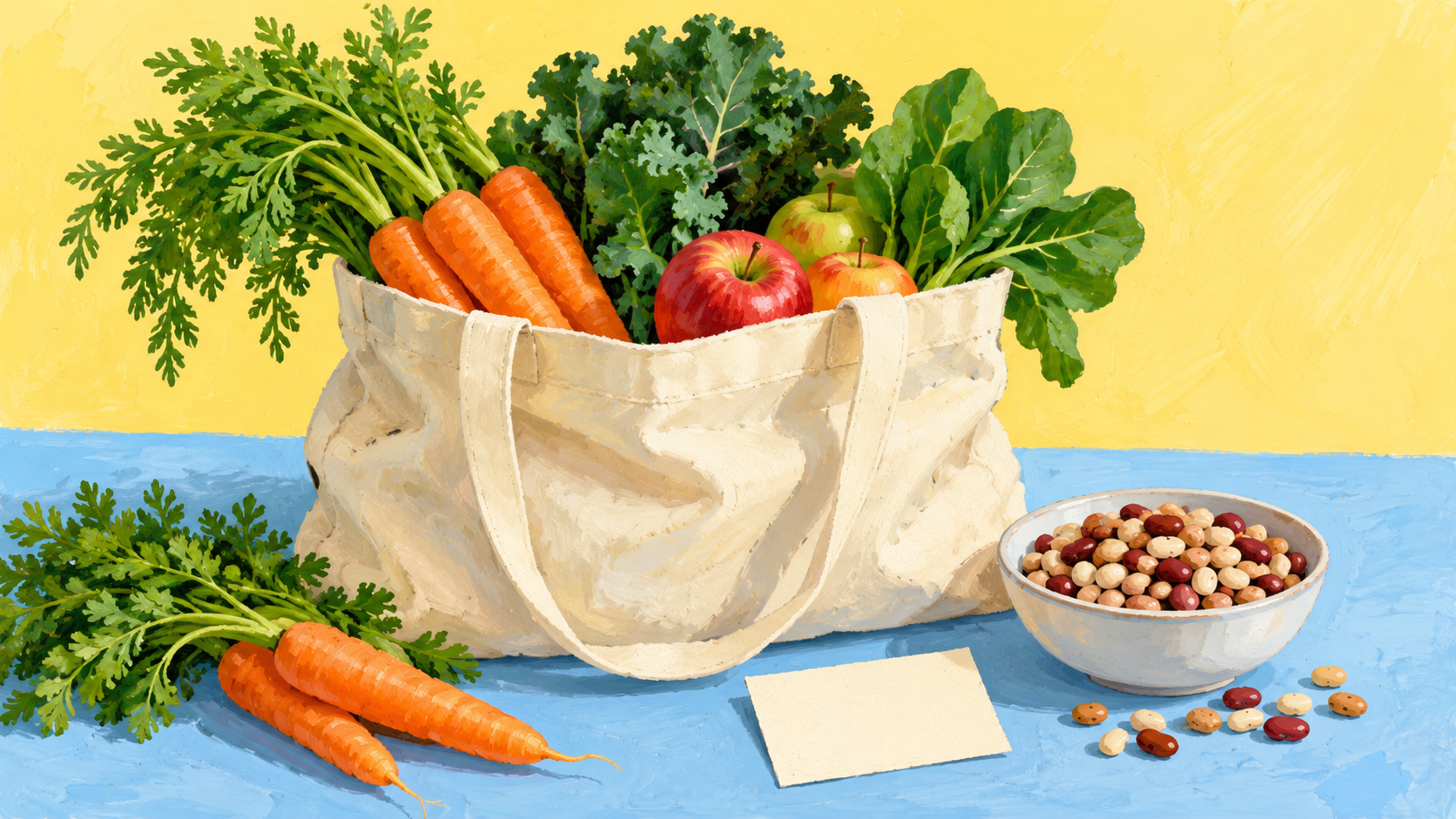
Sainsbury’s says qualifying Healthy Start customers can register by 11:59pm on November 9, 2026, for a £3 eGift Card each week for up to six weeks. The first cards are due on November 18, with a maximum total of £18. This is a retailer offer for customers in England, Wales and Northern Ireland, not a universal payment or an increase to NHS Healthy Start rates. Its crucial condition is historical: the customer must have used a Healthy Start Mastercard and Nectar card together in a Sainsbury’s transaction between October 20, 2025, and October 20, 2026, inclusive. Image: Original editorial illustration, not a photograph or an actual Sainsbury’s eGift Card.
This brief and the full story below are based on the disclosed sources. SearchTrends Daily’s interpretation appears later under “Our take.”
Full reporting
The complete story
Sainsbury’s announced the promotion on October 20, 2026. Independent trade publication The Grocer reported the launch that day. The retailer’s detailed offer page, rather than a shorthand headline about a “£3 rule”, explains who can take part and how the cards work. There is no new requirement for all shoppers to spend £3.
Registration is separate from holding a Healthy Start card. The offer also requires a Nectar card and the qualifying past transaction. Sainsbury’s says it will use the information requested on its registration form to check eligibility. Its FAQ explicitly says people without the required transaction during the qualifying period cannot join this first trial. A purchase made after October 20 does not meet that published historical condition.
The retailer links to its registration form from the official October 20 announcement cited below. The deadline is November 9 at 11:59pm. Approved customers receive their cards at the email address used to register, with the first issued on November 18 and final cards issued by December 23, according to the FAQ. This is up to six separate £3 cards, not a single £18 cash payment.
The cards are for eligible fruit, vegetables, beans and pulses in fresh, frozen, canned or dried forms. The FAQ excludes starchy items such as potatoes, yams, plantain and cassava; baked beans and coconut; juices and smoothies; dressed salads; and products with added sugar or several non-vegetable ingredients. Its examples include cauliflower cheese, breaded mushrooms and vegetable burgers. The complete retailer list remains the reference for individual products.
There is a £3 minimum spend when using each card. Each must be redeemed within seven days of issue to receive the next week’s card. Participating Sainsbury’s stores and its grocery website accept the offer; online deliveries must arrive within the dates specified on the card or offer terms, and delivery charges may apply. The cards cannot be converted into cash.
Source perspectives
What other reporting adds
These are the reports, official records, and trend observations used to build the story. The note under each link explains exactly what it contributes.
Primary October 20 announcement: six-week £3 eGift trial, England/Wales/Northern Ireland, November 9 registration and November 18 start. Contains the retailer’s official registration link. Read in full; commercial claims are not treated as independent outcome evidence.
Read original source ↗Sainsbury’sHealthy Start Vouchers: full FAQs and offer termsPrimary current conditions: Healthy Start Mastercard plus Nectar in the same transaction during October 20, 2025–October 20, 2026 inclusive; eligibility checks, £3 minimum spend, product exclusions, six-card maximum, seven-day use condition, online delivery dates and final issuance by December 23. FAQs expanded and terms read.
Read original source ↗The GrocerSainsbury’s brings back £3 Healthy Start top-up (Cara Houlton, October 20, 2026)Independent trade reporting corroborating the announcement, six-week duration, scope, registration deadline and start date, with history of the 2021 trial and 2022 prepaid-card transition. Full report read; no claim of independent trial-outcome verification.
Read original source ↗NHS Healthy StartGet help to buy food and milk: Healthy Start schemeOfficial distinction between the underlying prepaid-card scheme, four-week funding and eligible food/milk purchases; directs Scotland residents to Best Start Foods. Not used to determine any individual’s entitlement.
Read original source ↗SearchTrends Daily opinion
Our take
Analysis
What the evidence and search signal suggest
Our analysis is that the offer has three separate gates: a past qualifying transaction, registration by the deadline, and weekly redemption after approval. Describing only the first payment date misses the conditions that determine whether someone can enter or continue receiving the cards. The seven-day rule also means “up to £18” is a ceiling, not an unconditional amount for everyone who registers.
The historic transaction requirement makes this a test among identifiable existing shoppers. It does not establish how much unmet need exists among other Healthy Start households. Nor do the announcement and terms, by themselves, show how many people will register, redeem every card or change what they buy. Search interest cannot answer those questions, and we have not inferred take-up or nutritional outcomes from it.
Analysis and commentary are SearchTrends Daily’s interpretation. They are intentionally separated from the sourced account above.
Meaning
Why this matters
The most consequential detail is not the £3 headline but the gap between being eligible for NHS Healthy Start and qualifying for this particular retailer promotion. Existing Healthy Start recipients should not assume the extra support arrives automatically or that signing up now removes the past-purchase requirement.
The NHS describes its own scheme as a card funded every four weeks, with eligible purchases including milk and infant formula as well as produce and pulses. Sainsbury’s weekly eGift is a separate, narrower promotion. The NHS website directs people in Scotland to Best Start Foods instead; this announcement should not be described as an offer across the whole UK.
Background
How we got here
Sainsbury’s supported Healthy Start shoppers through a top-up trial in 2021. The Grocer and the retailer’s announcement both describe the scheme’s move from paper vouchers to prepaid cards in 2022 as part of the background to the new approach. The current FAQ recalls an earlier £2 produce voucher and describes this £3 eGift offer as a trial. Those earlier arrangements do not establish permanent entitlement to the new promotion, an extension beyond Christmas or eligibility for customers excluded by the current terms.
Outlook
What is likely to happen next
The next dates are the November 9 registration cutoff and the November 18 first-card issue. The current FAQ says final cards will be issued by December 23. The terms allow Sainsbury’s to change, suspend or withdraw the offer, so participants should use the current official terms and the dates on their own card.
We would revise this account if the retailer changes the qualifying period, expands access, alters the seven-day condition or confirms an extension. Published participation and redemption results would help test the trial’s reach; an announcement alone cannot establish that outcome. This is reporting on the offer, not a determination of anyone’s benefit eligibility.
A conditional editorial assessment based on the evidence available at the review date, not a guaranteed outcome.
Live record
Updates to this story
No material updates yet.


Commentary
What we think
SearchTrends Daily opinion: the useful test of this trial will be how clearly customers understand the restrictions and whether eligible participants can actually use the support. The closed historical purchase window deserves the same prominence as the £3 amount. A six-week promotion can provide limited extra purchasing support without being a replacement for the underlying public scheme or proof that a broader affordability problem has been solved. We would assess any future expansion against its published eligibility and redemption terms, not its headline value alone.