Royal Navy commissions first autonomous boat squadron in Portsmouth
The 180-person unit will operate uncrewed vessels alongside conventional forces. Its commissioning took place on November 5.
Verified brief
The story in 60 seconds
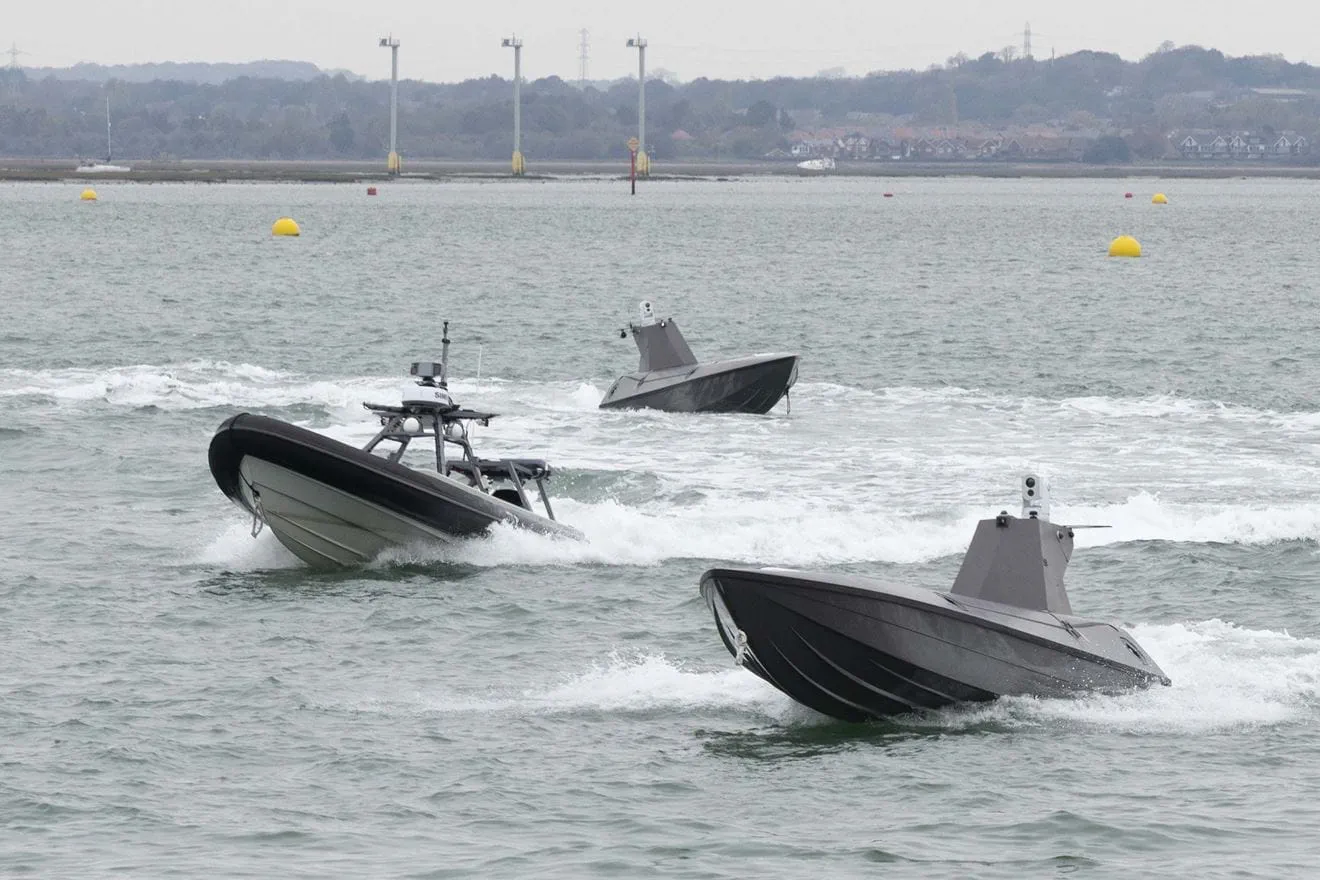
The Royal Navy’s first Autonomous Squadron has joined the fleet. A November 9 announcement describes its Portsmouth commissioning and a harbour demonstration of Kraken and Rattler boats controlled from a hub.
This brief and the full story below are based on the disclosed sources. SearchTrends Daily’s interpretation appears later under “Our take.”
Full reporting
The complete story
The 1st Autonomous Squadron was formally commissioned at HMNB Portsmouth on November 5, the Royal Navy said in its November 9 release. Its role includes operating uncrewed surface vessels individually and with task groups, while introducing further systems into the fleet.
The News in Portsmouth independently covered the ceremony, reporting that around 180 personnel will work in two watches to sustain operations around the clock. Its account describes both Rattler and larger Kraken K3 Scout vessels on display.
The navy says the event included boats manoeuvring around Portsmouth Harbour from a control hub. That demonstrates remotely directed activity at the ceremony; it does not establish that every planned mission is already operational or that vessels independently make combat decisions.
Source perspectives
What other reporting adds
These are the reports, official records, and trend observations used to build the story. The note under each link explains exactly what it contributes.
Original account of November 5 commissioning, harbour demonstration, Project Beehive transition and planned fleet integration; official photograph.
Read original source ↗The News, Portsmouth / Freddie Webb1st Autonomous Squadron commissioned in Portsmouth — November 9, 2026Independent ceremony coverage confirming the date, personnel, two-watch structure and boats displayed. Its conflicting wider investment figure is not used.
Read original source ↗Royal NavyTerms and conditions — content reuseStates site material is Crown copyright unless otherwise indicated and information may be reused under the Open Government Licence.
Read original source ↗SearchTrends Daily opinion
Our take
Analysis
What the evidence and search signal suggest
Our assessment: commissioning a squadron is an organisational milestone. The sources establish the unit’s formation and demonstration, while describing wider operational ambitions. Those ambitions should be assessed through subsequent deployments and published results, rather than treating the ceremony as proof of performance in every intended role.
Analysis and commentary are SearchTrends Daily’s interpretation. They are intentionally separated from the sourced account above.
Meaning
Why this matters
A dedicated unit gives uncrewed boats a standing organisational home, including people to operate and develop them. The technology story therefore involves training and integration as well as the craft themselves.
Background
How we got here
The squadron replaces Project Beehive, the navy’s initial proving-ground programme for autonomous and crewless boats. The official announcement places it within a wider hybrid-force effort to combine conventional ships and units with uncrewed systems.
Outlook
What is likely to happen next
The navy says the squadron will bring additional uncrewed surface vessels into the fleet and work with its development and capability teams. The cited announcement does not provide a dated deployment roster or a complete schedule of future systems.
Image credit: Royal Navy / Ministry of Defence, Crown copyright. Official photograph accompanying the November 9 announcement, captioned “Kraken K3 Scout and Rattler craft in Portsmouth Harbour.” It illustrates the commissioning-related harbour demonstration, not a combat deployment. Contains public sector information licensed under the Open Government Licence. Reproduced from the official site at reduced resolution; display may crop it. No endorsement implied.
A conditional editorial assessment based on the evidence available at the review date, not a guaranteed outcome.
Live record
Updates to this story
No material updates yet.

Commentary
What we think
The useful follow-up is how these boats work alongside crews and existing ships, and what experience the new unit reports after deployment.