Royal Mail union calls emergency summit as staff departures rise
The CWU wants urgent talks with ministers and Royal Mail after warning of rising departures during a disputed delivery overhaul. The company says its coverage has improved.
Verified brief
The story in 60 seconds
The postal union has called for an emergency summit as it says about 400 workers leave Royal Mail each week. That figure is the union’s estimate; Royal Mail says its new delivery model is improving daily coverage.
This brief and the full story below are based on the disclosed sources. SearchTrends Daily’s interpretation appears later under “Our take.”
Full reporting
The complete story
The Communication Workers Union called on 14 October for an emergency meeting with the UK government and Royal Mail management over staffing and service. The union said the company faces a recruitment and retention crisis. In reporting by BBC News, the CWU estimated that roughly 400 postal workers are leaving each week, compared with about 330 before the DM26 delivery model began rolling out. Royal Mail has not confirmed those departure figures, so they should be read as the union’s estimates.
The dispute centres on DM26, a reorganisation of delivery rounds designed to separate the patterns for first- and second-class letters while preserving daily first-class and parcel service. On 9 October, the CWU announced a pause to further rollout until the company and union agree a plan for offices where the model is not working. The union said Royal Mail had requested immediate negotiations.
Royal Mail gives a different account of the programme’s progress. In comments reported by the BBC, the company said rollout was about 90% complete and that it now reached 95% of addresses each day, up from 88% before deployment. It expects service to improve as implementation continues and says it plans to hire 22,000 temporary workers for Christmas. Those are company claims, not independent measurements of delivery speed.
Source perspectives
What other reporting adds
These are the reports, official records, and trend observations used to build the story. The note under each link explains exactly what it contributes.
Primary union statement confirming its 14 October call for talks and its assessment of staffing and service.
Read original source ↗BBC NewsHundreds of Royal Mail staff quitting each week under new efficiency plansOriginal reporting of CWU weekly departure estimate, Royal Mail response, DM26 rollout and Christmas staffing plan.
Read original source ↗Communication Workers UnionCWU announces pause to new delivery model rolloutPrimary 9 October union notice confirming pause to further DM26 rollout and requested negotiations.
Read original source ↗OfcomInvestigation into Royal Mail quality of service performance in 2025/26Primary regulator record for the pre-rollout delivery performance figures and open investigation.
Read original source ↗Royal MailLetter deliveries are changingCompany’s primary explanation of revised first- and second-class delivery pattern and rollout plans.
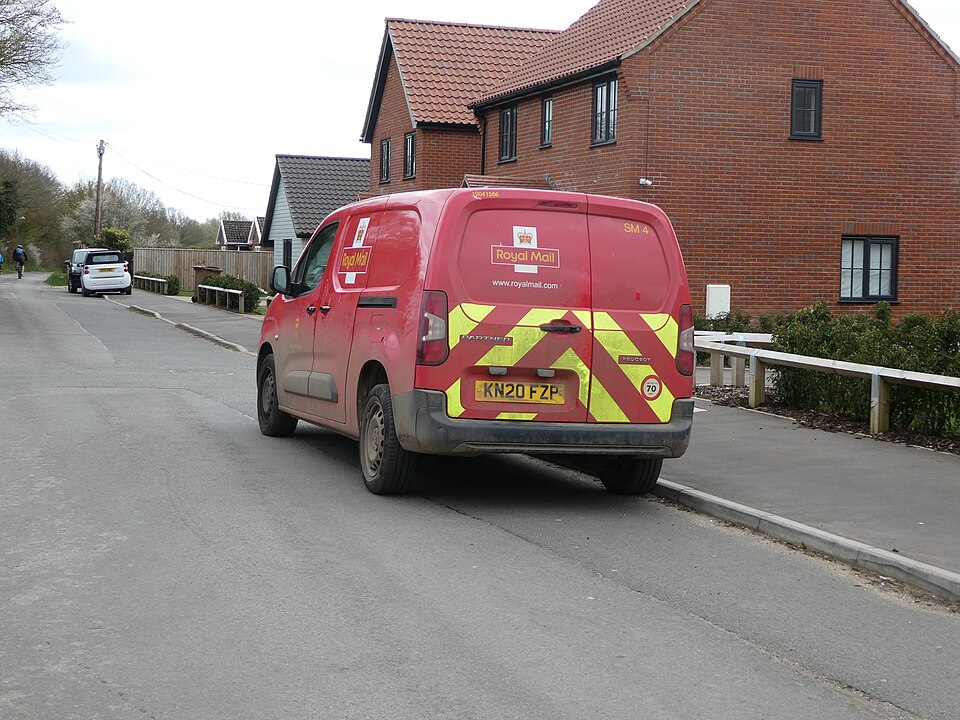
Read original source ↗Wikimedia Commons / Sebastiandoe5Royal Mail Van.jpg — archival photograph and creditArchival 2021 Royal Mail van photograph by Sebastiandoe5; image is illustrative, not from the 2026 dispute.
Read original source ↗Creative CommonsCC BY-SA 4.0 image licenseReuse terms for the Sebastiandoe5 archival photograph; thumbnail size adaptation noted in image credit.
Read original source ↗SearchTrends Daily opinion
Our take
Analysis
What the evidence and search signal suggest
The union and company are measuring different things: staff departures and conditions on one side, daily address coverage on the other. Both matter, but neither alone answers whether letters are arriving within the revised service standards. Published regulator data after the rollout will be the strongest test.
Analysis and commentary are SearchTrends Daily’s interpretation. They are intentionally separated from the sourced account above.
Meaning
Why this matters
Postal delays can affect medical appointments, bills and other time-sensitive correspondence, while staffing pressure makes the Christmas parcel surge harder to manage. The question for customers is whether the redesigned rounds deliver more reliably in practice, not simply whether they have been installed.
Background
How we got here
Ofcom changed the universal service framework in 2025. Under Royal Mail’s published plan, second-class letters move to delivery on alternate weekdays, while first-class letters retain six-day delivery and parcels can be delivered up to seven days a week. The regulator opened an investigation in June 2026 after Royal Mail reported that 75.7% of first-class letters arrived within one working day and 90.2% of second-class letters within three working days in 2025/26, below the targets then in force. Those older figures predate the full DM26 rollout and do not establish whether the new model will succeed.
Image: archival Royal Mail van photograph by Sebastiandoe5, Wikimedia Commons, CC BY-SA 4.0. The image is not from the present dispute.
Outlook
What is likely to happen next
The CWU has asked ministers and Royal Mail to convene a summit, but no meeting or agreement has been announced. Negotiations over paused offices and forthcoming service data will show whether the parties can settle the rollout dispute before the Christmas peak. A union warning of collapse is a warning, not a confirmed forecast.
A conditional editorial assessment based on the evidence available at the review date, not a guaranteed outcome.
Live record
Updates to this story
No material updates yet.


Commentary
What we think
Our view: urgent talks are justified when frontline staffing and delivery performance are both disputed. Ministers should ask for transparent, comparable figures on departures, uncompleted rounds and on-time mail so households can judge whether the overhaul is working.