Giants and Commanders tie 27–27: why Washington never got a final kick
New York recovered from 14 points down, but neither team scored in overtime on October 11. Washington reached kicking range and then ran out of time.
Verified brief
The story in 60 seconds
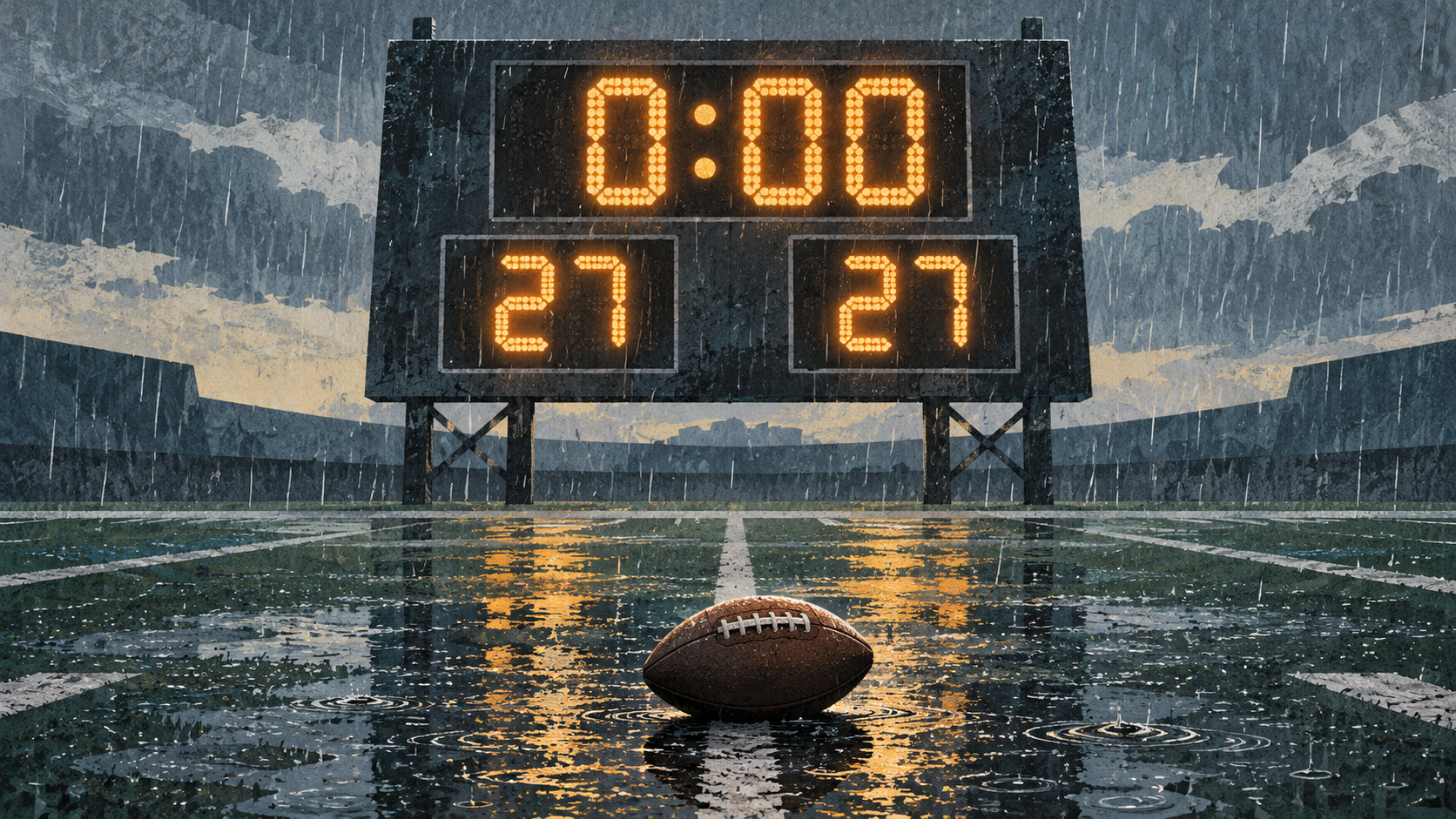
The Giants and Commanders finished 27–27 on Sunday, October 11, 2026. Washington’s last overtime play began with 12 seconds left at the New York 24-yard line; no further snap followed. NFL regular-season overtime stops after one 10-minute period if the score is still level.
This brief and the full story below are based on the disclosed sources. SearchTrends Daily’s interpretation appears later under “Our take.”
Full reporting
The complete story
The New York Giants and Washington Commanders tied 27–27 in Landover, Maryland, on Sunday, October 11. There was no winning field goal: Washington reached the Giants’ 24-yard line, but the clock expired after the last play before the Commanders could run another. Field Level Media independently reported the tied result and the failed final sequence.
The Giants’ official account says the last play began on second-and-eight with 12 seconds remaining. Jayden Daniels was brought down for no gain. That left a potential 42-yard field-goal attempt, but Washington never got lined up for it. An opportunity to attempt a kick is not the same as a guaranteed successful kick.
The game had reached overtime because Jameis Winston threw two fourth-quarter touchdown passes. Field Level Media reports that New York trailed 27–13 before Winston found Isaiah Likely for a 17-yard score on fourth-and-eight. A later 17-yard touchdown to Malik Nabers tied it with 1:43 remaining in regulation. Winston finished with 326 passing yards and three touchdowns; Likely caught two of those scores.
Overtime offered both sides openings. The Giants’ recap records Dominic Zvada missing a 46-yard field goal on New York’s first possession. Washington then punted. New York threatened again, but Cam Skattebo lost a fumble; Field Level Media places Washington’s recovery at its own 23 with 1:55 left. Daniels then moved the Commanders into range, without a final scoring play.
Why was there no second overtime? The official 2026 NFL rulebook caps regular-season overtime at one 10-minute period. Both sides normally have an opportunity to possess the ball, but that remains subject to the time limit. A level score when that period expires produces a tie. Playoff rules are different: tied postseason games continue through further overtime periods until a winner is determined.
Source perspectives
What other reporting adds
These are the reports, official records, and trend observations used to build the story. The note under each link explains exactly what it contributes.
Primary team account of the October 11, 2026 final result, comeback, missed overtime field goal, possessions and final clock sequence. Also supports the Giants’ previous tied games in 2022 and 1997. Read in full and checked again before publication; not a preview.
Read original source ↗Field Level MediaCommanders, Giants each squander OT chances in season’s first tieIndependent reporting of the October 11, 2026 27–27 final, both teams’ records, Jameis Winston’s passing totals, New York’s fourth-quarter touchdowns, Washington’s recovery with 1:55 left in overtime and the final clock sequence. Read in full; score and sequence cross-checked with the Giants account.
Read original source ↗NFL Football Operations2026 Official Playing Rules — Rule 16: Overtime ProceduresThe official 2026 rulebook, printed page 65 (PDF page 72), Rule 16, Section 1, Article 3: one regular-season overtime period of no more than ten minutes and a tie if the scores remain equal when it ends. Both teams’ possession opportunities are subject to the time limit. Article 4 explains why postseason games continue until a winner.
Read original source ↗SearchTrends DailyNFL Week 5: Patriots rout Raiders, Vikings go 5–0 and Packers beat BearsRelated internal coverage of three other October 11 Week 5 games. This link is for wider context, not verification of the Giants–Commanders result or a claim that all NFL searches concern the same game.
Read original source ↗Google TrendsUnited States Trending Now — past 24 hoursDiscovery evidence observed October 12, 2026 at about 00:16 UTC: an active Giants vs Commanders cluster with related Dan Quinn and matchup searches. This changing page identifies search interest, not the match result or proof that every search in the broad cluster concerns the final clock. Match facts were verified separately through the cited reporting and rulebook.
Read original source ↗SearchTrends Daily opinion
Our take
Analysis
What the evidence and search signal suggest
Our analysis: separate three questions that a single final score can obscure. First, why did the game reach overtime? New York’s late passing touchdowns erased the deficit. Second, did either side have opportunities in the extra period? The missed kick, fumble and final Washington drive show that they did. Third, why did play stop? The regular-season clock limit settled that procedural question.
Washington’s final sequence makes clock management the clearest explanatory angle, but it would be too strong to call a hypothetical field goal a certain win. Getting the kicking unit a legal snap would only have created a chance to score. Nor does one sequence establish how the teams will perform through the rest of the season.
Analysis and commentary are SearchTrends Daily’s interpretation. They are intentionally separated from the sourced account above.
Meaning
Why this matters
The result left New York at 3–1–1 and Washington at 1–3–1, records corroborated by Field Level Media. Neither side added a win or a loss. For readers checking a score app, “final” alongside equal totals is therefore not an unfinished feed.
The football consequence is less tidy. New York recovered from a substantial deficit but also had chances to win. Washington built the lead and reached a late scoring opportunity, yet secured neither the victory nor a final attempt.
Background
How we got here
This rivalry has produced ties before. The Giants’ account identifies their previous two tied games as Washington meetings on December 4, 2022, and November 23, 1997. That history does not explain Sunday’s decisions, but it shows that a drawn result is an established part of NFL regular-season football.
Image credit: SearchTrends Daily original AI-generated editorial illustration. The clock and equal score panels are conceptual, not a photograph of this game or its stadium.
Outlook
What is likely to happen next
The next useful evidence is a fuller explanation of the final call and communication, alongside the game film and any official statistical corrections. If those show a different constraint or sequence, our assessment of the decision-making should change. The verified 27–27 result is separate from that interpretation.
Both teams now prepare for their next fixtures. Better late-game execution in subsequent games would be evidence of improvement; Sunday alone cannot establish that it will happen. Our separate Week 5 roundup covers the completed Patriots–Raiders, Vikings–Saints and Packers–Bears games, not this ending.
A conditional editorial assessment based on the evidence available at the review date, not a guaranteed outcome.
Live record
Updates to this story
No material updates yet.



Commentary
What we think
SearchTrends Daily opinion: the most useful account of this ending is not simply that the Commanders “lost” a game they actually tied. It is that their last possession ended without testing the scoring option they had moved into range to use. New York deserves recognition for the recovery in regulation, while its own missed opportunities belong in the same assessment. A dramatic finish should sharpen the explanation, not replace it with an exaggerated verdict.