EU leaders agree European team for Ukraine peace talks
The EU institutions will work with France, Germany, Italy, Poland and the UK. Agreement on representation does not settle the terms of a peace deal.
Verified brief
The story in 60 seconds
European Council President António Costa says leaders in Dublin agreed a European team for Ukraine peace negotiations, comprising the EU institutions and five countries from the Coalition of the Willing. The Council names France, Germany, Italy, Poland and the United Kingdom. Individual EU representatives and any negotiating outcome remain unconfirmed in this report.
This brief and the full story below are based on the disclosed sources. SearchTrends Daily’s interpretation appears later under “Our take.”
Full reporting
The complete story
At his November 13 press conference following the informal European Council in Dublin, António Costa said leaders had agreed a European team for negotiations on peace in Ukraine. He described its composition as the EU institutions and the E5 countries of the Coalition of the Willing.
The Council’s meeting account identifies those five countries as France, Germany, Italy, Poland and the United Kingdom. It says the team will coordinate Europe’s diplomatic contribution while working with all EU member states.
Associated Press independently reports the plan to send a team from the EU and those five countries to the next round of talks. AP says it was not immediately clear who would represent the EU institutions. This article does not identify an appointed lead envoy.
Costa said Ukraine alone has legitimacy to decide questions about its territory and sovereignty. He said security guarantees should be handled through the Coalition of the Willing in coordination with NATO. These are the positions he set out, rather than agreed terms with Russia.
Source perspectives
What other reporting adds
These are the reports, official records, and trend observations used to build the story. The note under each link explains exactly what it contributes.
Primary announcement that leaders agreed an EU-institutions/E5 team; Costa’s stated positions on sovereignty, security guarantees and the forthcoming financing discussion.
Read original source ↗European CouncilInformal meeting of heads of state or government, November 13, 2026 — main resultsNames France, Germany, Italy, Poland and the UK; explains coordination with member states and the planned November 26–27 discussion.
Read original source ↗Associated Press / Jill Lawless and Sam McNeilEurope to send a diplomat team to Ukraine talks as leaders push for a voiceIndependent November 13 report corroborates the EU-plus-five-country team; says the individual EU representatives were not immediately clear.
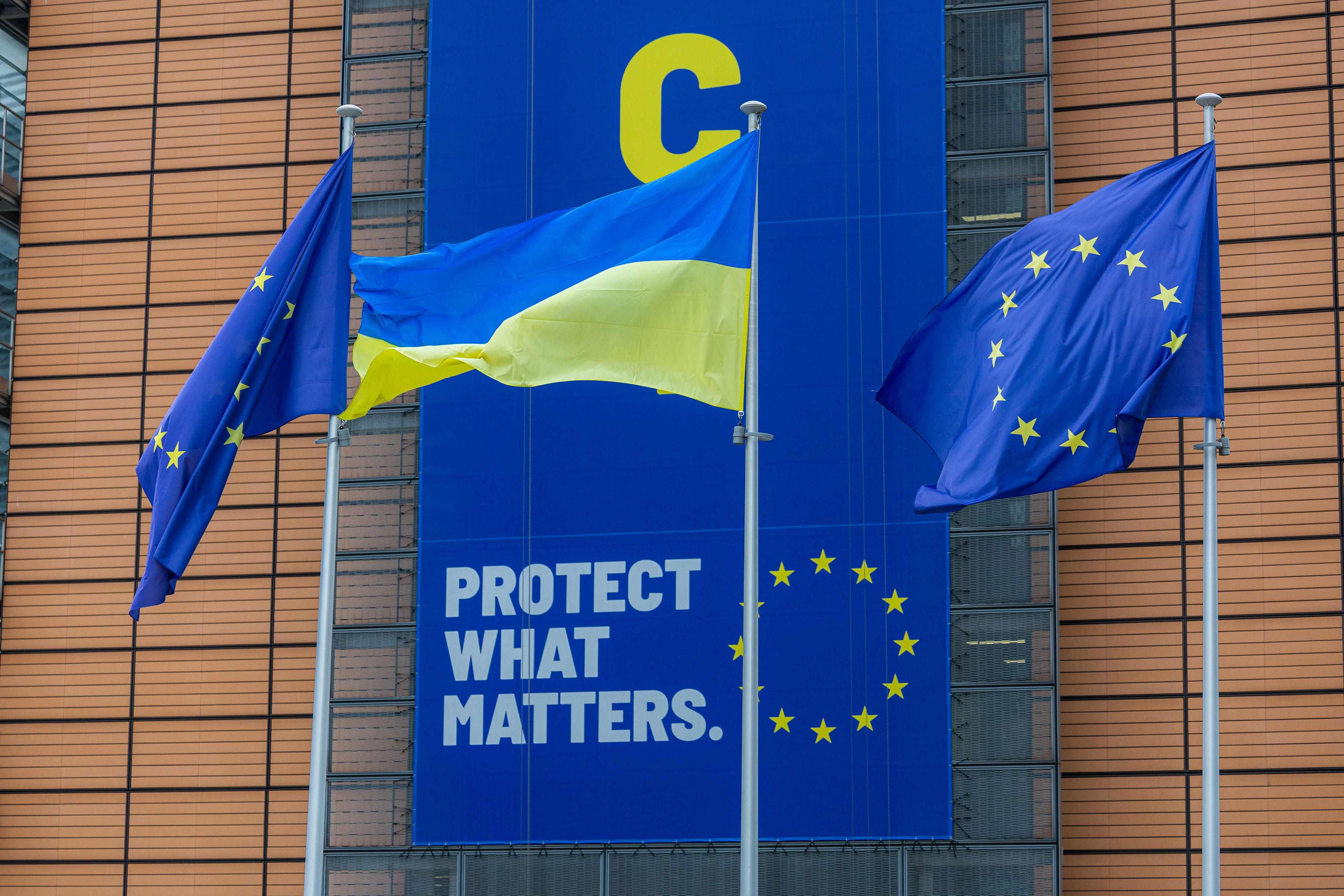
Read original source ↗Wikimedia Commons / European Commission Audiovisual ServiceUkrainian flag in front of the Berlaymont building — P-070335-00-09Archive Brussels photograph dated August 21, 2026, credited to EU/Xavier Lejeune; CC BY 4.0 licensing and attribution.
Read original source ↗SearchTrends Daily opinion
Our take
Analysis
What the evidence and search signal suggest
Our assessment: agreeing a team addresses who can coordinate Europe’s contribution, but not what other parties will accept. The practical test is how the EU institutions, the five participating countries and other member states maintain a common position. Named representatives, negotiating arrangements and concrete outcomes need separate confirmation.
Analysis and commentary are SearchTrends Daily’s interpretation. They are intentionally separated from the sourced account above.
Meaning
Why this matters
The announcement sets out how European institutions and participating governments intend to coordinate their representation. It includes the United Kingdom alongside four EU member states. It does not establish a ceasefire, a settlement, a deployed security force or agreement on territorial questions.
Background
How we got here
The November 13 informal European Council followed the European Political Community meeting in Dublin the previous day. The Council’s account places the team proposal within ongoing diplomatic efforts concerning the war in Ukraine.
The same November 13 meeting included a strategic discussion about artificial intelligence. That separate discussion should not be confused with the decision on diplomatic representation.
Outlook
What is likely to happen next
Costa said EU leaders would discuss Ukraine’s financing needs for 2027 and beyond at their November 26–27 meeting, building on forthcoming Commission proposals. This is a planned discussion, not an announced funding allocation. This report does not establish the date or location of the next negotiating round.
Image credit: © European Union, 2026 / Xavier Lejeune, European Commission Audiovisual Service, via Wikimedia Commons; CC BY 4.0 (https://creativecommons.org/licenses/by/4.0/). Archive photograph taken August 21, 2026 outside the Berlaymont building in Brussels. Displayed with the site’s crop. It is contextual imagery, not a photograph of the Dublin summit or peace negotiations; no endorsement is implied.
A conditional editorial assessment based on the evidence available at the review date, not a guaranteed outcome.
Live record
Updates to this story
No material updates yet.



Commentary
What we think
A useful diplomatic update distinguishes the structure agreed by leaders from a settlement that has yet to emerge. Representation is an important step, but it is not a peace agreement.