Why one storm can disrupt flights far beyond the airport underneath it
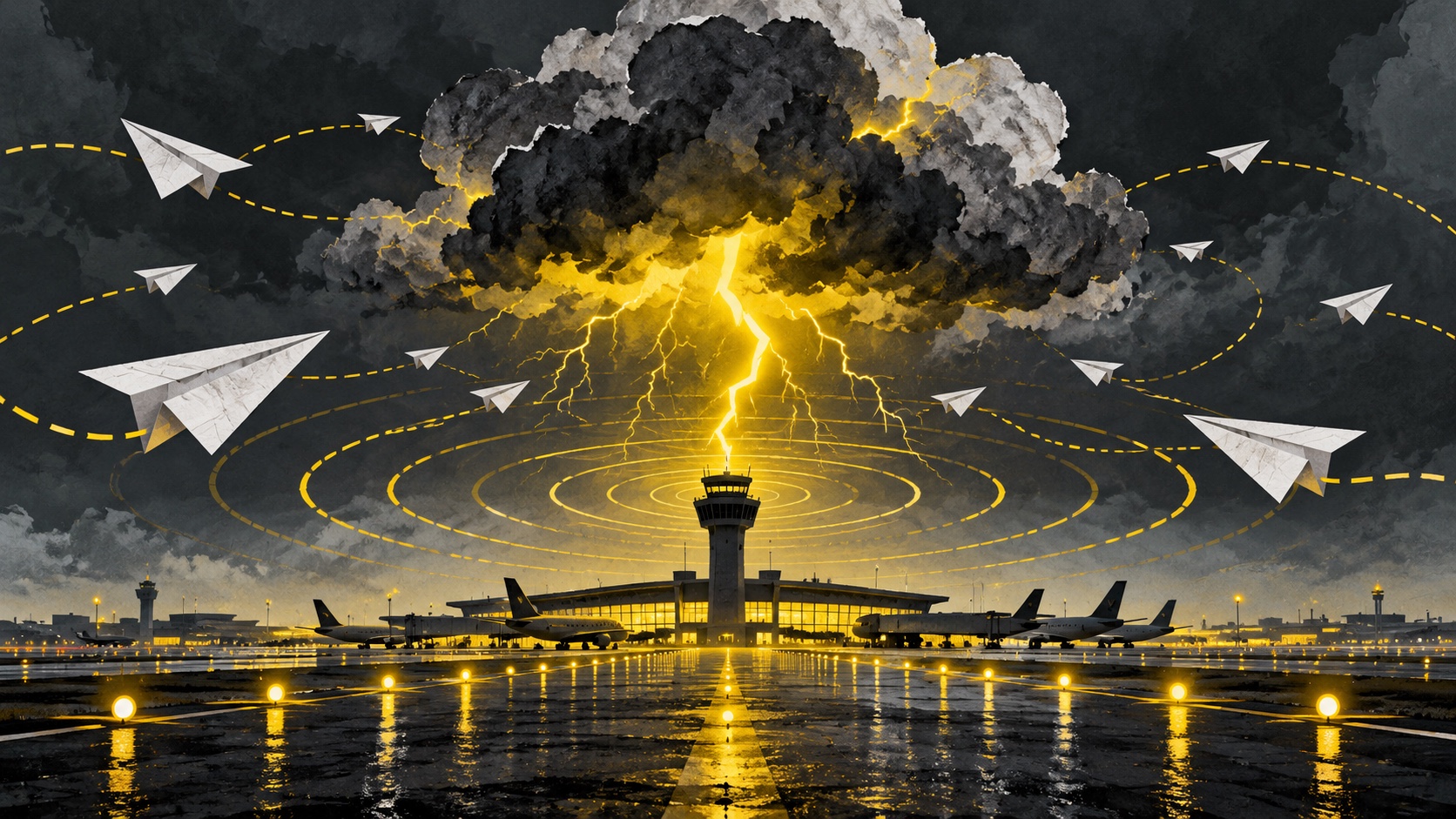
Weather does not need to close every runway to overwhelm a tightly connected flight network.
Verified brief
The story in 60 seconds
A BBC examination of summer disruption describes how storms, crowded airspace and limited diversion capacity can combine. Experts differ on the scale of the worst-case safety risk. The practical story is how aviation builds enough resilience for a weather event that affects several airports at once.
This brief and the full story below are based on the disclosed sources. SearchTrends Daily’s interpretation appears later under “Our take.”
Full reporting
The complete story
The BBC describes a late-June Saturday when storms over southern England and northern Europe left around 900 flights to and from Heathrow and Gatwick delayed, with additional cancellations. Controllers had to route aircraft around weather cells, reducing usable airspace during a busy travel period.
Its reporting explores the possibility of several London airports being affected simultaneously. A risk consultant warns that this could put exceptional pressure on diversions; another aviation specialist considers the most severe scenario unlikely and stresses the industry's ability to respond. This is an examination of system resilience, not a warning that a specific upcoming flight is unsafe or a forecast of an imminent disaster.
Source perspectives
What other reporting adds
These are the reports, official records, and trend observations used to build the story. The note under each link explains exactly what it contributes.
SearchTrends Daily opinion
Our take
Analysis
What the evidence and search signal suggest
The central vulnerability is correlated disruption: several parts of a network failing at the same time. Planning around the loss of one airport is different from planning around a regional weather system. More generous buffers may increase operating costs or reduce scheduled capacity, but extremely tight scheduling leaves less room to recover. Climate-related risk should be evaluated through operational evidence, not by attributing every individual delay to climate change.
Analysis and commentary are SearchTrends Daily’s interpretation. They are intentionally separated from the sourced account above.
Meaning
Why this matters
A disruption at one hub can delay aircraft, crews and onward connections elsewhere. Passengers may experience the consequences far from the original storm, which helps explain why a clear sky at their departure airport does not guarantee an on-time flight.
Background
How we got here
Airports depend on more than a landing runway. Aircraft need parking space and fuel, while diverted passengers need terminal capacity and support. A destination that can accept one diversion may not be able to accommodate a large simultaneous influx.
Outlook
What is likely to happen next
For travel decisions, check current airline and airport updates rather than this background analysis. At an industry level, watch diversion planning, weather forecasting and recovery performance during widespread disruption. Expert disagreement should remain visible as those risks are assessed.
A conditional editorial assessment based on the evidence available at the review date, not a guaranteed outcome.
Live record
Updates to this story
No material updates yet.
Commentary
What we think
Our view: airlines and airports should explain recovery plans as clearly as they advertise connections. Travellers need timely information about alternatives, not only repeated estimates that move by another hour. Resilience has value even on the days when it is unused.